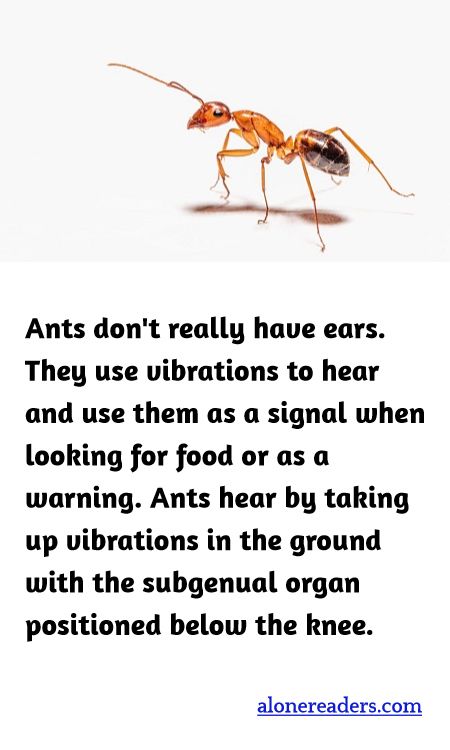
Ants are fascinating creatures, not just because of their complex societies and strength relative to size, but also because of their unique sensory capabilities. One of the lesser-known facts about ants is that they do not have ears in the conventional sense. Instead, these tiny insects have developed a remarkable method to "hear" by sensing vibrations through the ground.
The key to this auditory process lies in the subgenual organ, which is located just below their knee joints. This small but incredibly sensitive organ allows ants to pick up vibrations that travel through surfaces like the earth or plant stems. These vibrations are crucial for survival, steering ants towards sources of food or alerting them to potential threats.
Furthermore, ants use these vibrations as a form of communication. By picking up specific patterns of vibration, they can differentiate between a food source being discovered and a warning signal from fellow ants. This sophisticated form of communication is essential in maintaining the social structure and efficiency of the colony.
In some species, like leaf-cutter ants, vibration sensing is so advanced that workers can determine the size and location of fallen pieces of leaves based on the intensity and frequency of vibrations they detect. This level of sensitivity significantly enhances their efficiency in gathering optimal resources for their colony.
Therefore, while ants may lack traditional ears, their ability to "hear" through vibrations is a vivid example of the remarkable adaptations of insects to their environments, providing them with a full sensorial experience necessary for their survival and social organization.
