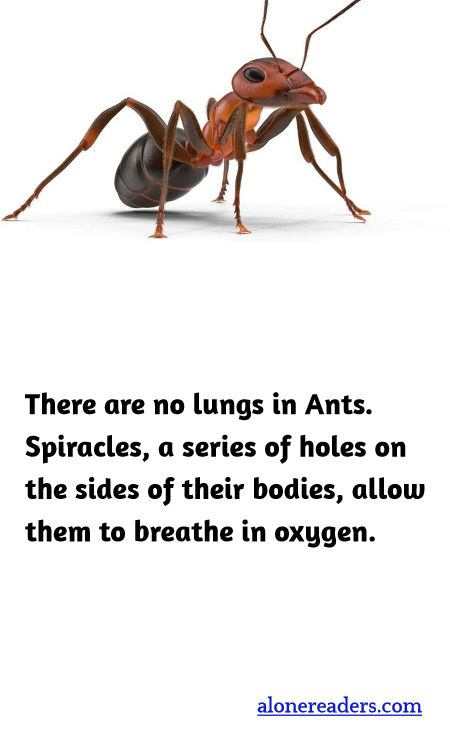
Ants, though lacking lungs, have a fascinating respiratory system adapted perfectly to their small size and underground lifestyle. Instead of lungs, ants breathe through a network of tiny holes located around the sides of their bodies. These holes are known as spiracles, and they are essential for the exchange of oxygen and carbon dioxide.
The spiracles are connected to a system of tubes known as tracheae, which serve to transport oxygen directly to the muscles and organs that require it. This system is highly efficient for a creature as small as an ant, allowing them to get by without the complex lung systems that larger animals have. The direct delivery of oxygen ensures that every part of their body gets exactly what it needs to function, without the need for a circulatory system to transport oxygenated blood.
Moreover, this unique respiratory system of ants enables them to survive in environments where other creatures might struggle. For instance, their ability to close these spiracular holes helps them prevent water from entering their bodies during heavy rain–an adaptation crucial for their survival in various climates and conditions. Also, it enables them to maintain a high level of activity, which is necessary for foraging, escaping from predators, and excavating intricate underground colonies.
However, the simplicity of their respiratory system also means that ants are susceptible to gases and vapors, which can easily enter their system and cause harm. This sensitivity is one reason why many pest control methods against ants involve the use of gas-based poisons that disrupt their ability to breathe.
In conclusion, the lack of lungs in ants is a clear example of how these tiny creatures are perfectly adapted to their environment and life demands. Their spiracle and tracheal system provides a fascinating glimpse into the diversity of life's solutions to common biological challenges, highlighting the intricate balance of form and function in evolution.
