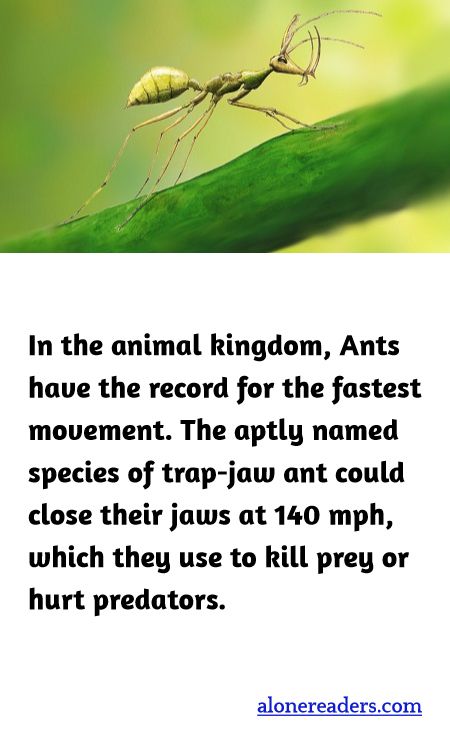
In the vast and diverse animal kingdom, certain features and abilities set some species apart. Among these remarkable animals, ants, particularly the species known for their incredibly rapid movements, hold a unique record. The trap-jaw ants, identified scientifically under genera such as Odontomachus and Anochetus, are famous for their jaw-dropping (quite literally!) speed in snapping their mandibles. These tiny but formidable creatures can snap their jaws shut at velocities reaching 140 miles per hour, making it one of the fastest movements in the animal kingdom.
This extraordinary speed isn’t just for show. Trap-jaw ants use their rapid mandibles as a multifunctional tool for various survival strategies. Predominantly, this lightning-fast action is employed for capturing prey. The speed and force of their jaw snap can stun or kill insects or other small creatures, which the ants then feed on. Interestingly, this isn’t the only use of their impressive jaws. If threatened, these ants can also use their mandibles against much larger predators. The impact of the snap can deliver a surprisingly painful bite to potential threats, often deterring much bigger animals from considering them as a meal.
Moreover, the speed of their mandibles has another fascinating application—locomotion. When threatened, trap-jaw ants can snap their jaws against a hard surface, propelling themselves backwards to escape from predators quickly. This not only provides a speedy escape mechanism but also helps these ants avoid confrontations that they are likely to lose due to their small size.
The mechanism behind such explosive speed involves the storage of elastic energy in certain parts of their jaw muscles and structures. When the muscles contract, this energy is released suddenly, allowing for the rapid snapping action. This function is supported by a latch mechanism that holds the jaws open. When the latch is released, the stored energy is unleashed, resulting in the high-speed mandible snap.
The evolutionary development of such a feature is truly a testament to the dynamic, survival-driven adaptability observed in ants and serves as an excellent example of natural selection. The fast-moving jaws help trap-jaw ants thrive in their ecological niches, making them both fascinating subjects of scientific study and awe-inspiring examples of nature's ingenuity.
