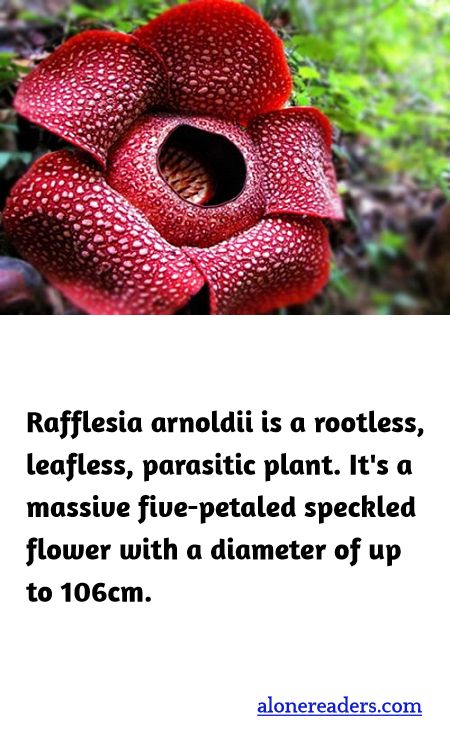
Rafflesia arnoldii holds the distinction of being one of the most unusual plants in the world. Native to the rainforests of Southeast Asia, particularly Indonesia, Malaysia, Borneo, and Sumatra, this species stands out due to its massive, distinctive blooms that can reach up to 106 cm in diameter, making it the largest individual flower on Earth. Unlike typical flowering plants, Rafflesia arnoldii does not have roots, stems, or leaves. It is entirely parasitic, living off the water and nutrients of host vines from the Tetrastigma genus, which are commonly found in its jungle habitat.
The lifecycle and reproductive strategy of Rafflesia arnoldii are as remarkable as its physical appearance. The plant spends the majority of its life hidden within its host plant's tissues, only becoming visible when it is ready to reproduce. Emerging from the host as a small bud, the flower takes several months to develop, finally bursting forth as a giant, reddish-brown and speckled bloom. The flower emits a strong odor similar to decaying flesh, earning it the nickname "corpse flower." This scent attracts carrion flies, which play a crucial role in pollination.
The pollination process of Rafflesia arnoldii is as bizarre as the plant itself. Given that individuals are widely spaced and flowering occurrences are rare, the likelihood of two flowers blooming simultaneously within proximity is slim, complicating cross-pollination. The flowers are unisexual, so it requires a male and a female flower to be in bloom at the same time for pollination to occur. When successful, the plant produces large fruits filled with thousands of seeds, which are then dispersed by various forest animals.
Despite its fascinating nature, Rafflesia arnoldii faces threats from deforestation and habitat destruction. The specific ecological requirements and the dependency on its host plant make it highly susceptible to environmental changes. Additionally, the rarity and striking appearance of its flowers make it a target for poachers and collectors, adding to the species' vulnerability.
Conservation efforts are vital for ensuring the survival of Rafflesia arnoldii. Protection of its rainforest habitat and laws against the trade of its parts are critical. Researchers continue to study its complex biology and interactions with its host to better understand how to protect this extraordinary botanical wonder. As efforts increase to preserve this unique species, Rafflesia arnoldii remains a symbol of the rich biodiversity and ecological complexity of Southeast Asian rainforests.
