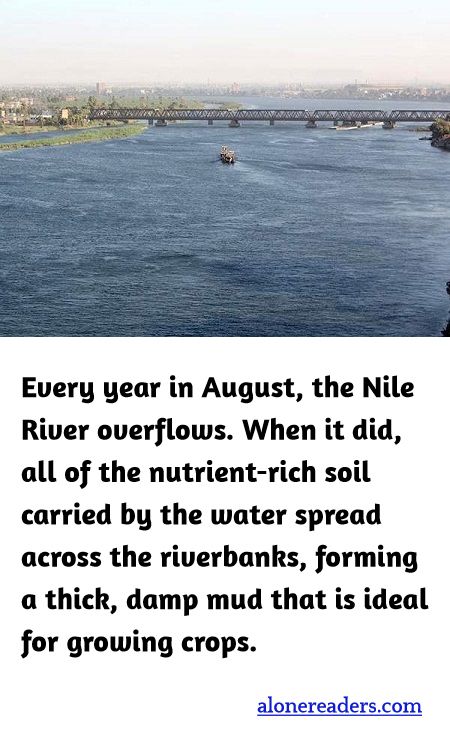
Every August, the majestic Nile River, one of the longest rivers in the world, undergoes a natural and historically significant transformation. This annual phenomenon, known as the inundation of the Nile, has been a vital event for millennia, shaping the agriculture, economy, and culture of ancient and modern Egypt alike.
Originating from deep within the African continent, the waters of the Nile journey through varied terrains, gathering nutrients and sediments along their path. During the rainy season in Ethiopia, water levels rise due to the heavy rains that fall on the Ethiopian Highlands, the source of much of the Nile's water. This surge causes the Nile to overflow its banks by August. When this happens, the waters spill over, spreading across the adjoining floodplains.
The overflow carries with it a rich, silt-laden sediment composed of finely ground rock and organic material. As the waters recede, they leave behind this nutrient-rich silt on the riverbanks and in the delta. This fertile, dark soil is known as alluvium, and it provides a bountiful and fertile ground for agriculture. Historically, this annual flooding was so reliable and crucial that ancient Egyptians based their entire agricultural calendar on it, calling their three seasons: Akhet (inundation), Peret (planting and growing), and Shemu (harvesting).
The bounty provided by the flooded Nile was so significant that it enabled the ancient Egyptians to cultivate enough food to support a substantial population, develop a complex society, and pursue architectural and artistic endeavors that are still marveled at today. Modern techniques of irrigation and the construction of the Aswan High Dam have changed the natural flooding cycle of the Nile. While these modern interventions have allowed for more controlled water management and year-round farming, they have also altered the natural deposition of sediments, which continues to impact agriculture and the ecology of the basin.
Today, while the river no longer floods its banks as it once did due to human intervention, the historical memory of the Nile's inundation persists in Egyptian culture and is celebrated as a reminder of how the natural world has shaped human civilization. The legacy of the Nile's floods continues to be a poignant testament to the intertwined fates of nature and humanity, teaching us valuable lessons about sustainability, harmony, and adaptation.
