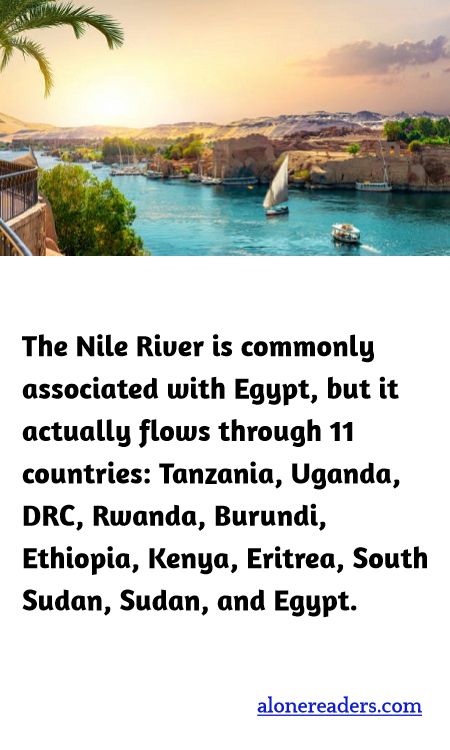
The Nile River, one of the world's longest rivers, is typically synonymous with the imagery of Egypt and its ancient civilizations. However, its vast reach extends far beyond Egypt, touching a total of 11 countries. This immense river system is composed of two major tributaries: the White Nile and the Blue Nile, which converge in Sudan's capital, Khartoum, before flowing northward through Egypt to the Mediterranean Sea.
The source of the White Nile is in the Great Lakes region of Central Africa, with most scholars agreeing that it begins in Rwanda or Burundi, flowing north through Tanzania, Uganda, and then into South Sudan. Along its journey, it receives numerous tributaries from countries like the Democratic Republic of the Congo and Kenya. The Blue Nile, on the other hand, begins at Lake Tana in Ethiopia, traveling northwest through the country and into Sudan, where it joins with the White Nile.
This expansive waterway not only serves as a critical source of water but also supports agriculture in an otherwise arid region, sustains ecosystems, and provides livelihoods for millions of people. Each of the nations through which the Nile flows has cultural and historical connections to the river, utilizing its resources in various ways. In Uganda and Ethiopia, for example, the Nile is crucial for hydroelectric power generation, significantly contributing to these countries' energy needs.
Despite its life-giving properties, the Nile River is also at the heart of geopolitical tensions and conflicts among the nations along its banks. Issues such as water rights, usage, and management are sources of dispute, particularly given the context of climate change and increasing populations, which intensify the pressure on its vital waters.
The river's importance extends into the cultural domain, deeply embedded in the traditions and histories of the peoples it touches. In Egypt, the Nile is celebrated with festivals like Wafaa El-Nil, reflecting its integral role in the country's agriculture and its representation in ancient mythology and culture. Similar cultural significances are echoed in other countries it traverses, showcasing a river that is far more than a mere channel of water, but a source of life, conflict, and unity for a diverse region.
