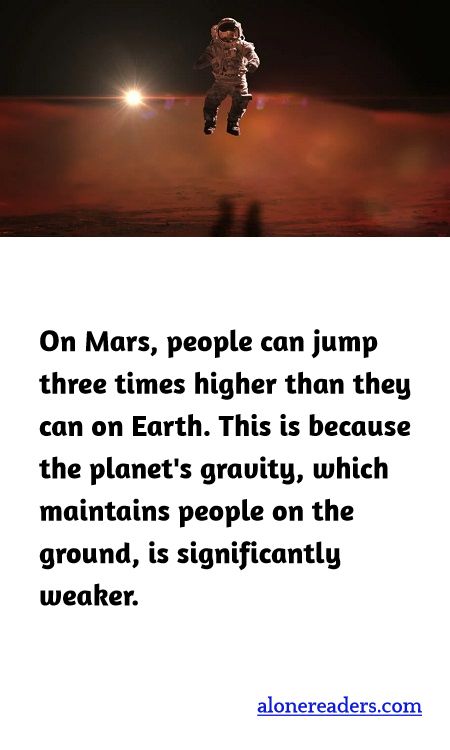
On Mars, the stark difference in gravitational strength compared to Earth leads to some surprising physical phenomena, one of which is the ability to jump three times higher. Mars has a gravitational pull that is only about 38% as strong as Earth’s. This significant reduction in gravity means that the forces pulling back on objects and individuals are noticeably weaker, thereby reducing the weight of objects and people while on the Martian surface.
The implications of this are both intriguing and diverse. For instance, the ability to leap great distances not only alters basic human activities like walking and running but also impacts how tasks and operations would be conducted. In a lower gravity environment, simple acts like lifting heavy objects, constructing shelters, or conducting scientific experiments become easier due to the reduced weight, though they also require new techniques to manage the increased potential for uncontrolled movements.
Moreover, the novelty of high jumping on Mars could serve recreational and practical purposes, potentially leading to new sports or physical training activities designed for the conditions on Mars. These activities could be crucial for maintaining the health and morale of colonists on the Martian surface.
However, there are challenges tied to this altered gravity. The human body is adapted to Earth's gravity, and long durations in lower gravity environments could have adverse effects on muscle strength, bone density, and cardiovascular health. NASA and other space agencies have been studying these impacts extensively in astronauts who spend prolonged periods in the microgravity environment aboard the International Space Station.
In preparation for extended stays or colonization of Mars, scientists are looking into specialized training regimens and technologies that could offset these health issues. Innovations such as gravity simulation habitats, resistance exercise equipment, and rigorous physical health monitoring might become standard provisions for future Martian settlers.
In essence, while our ability to jump three times higher on Mars is an intriguing consequence of the planet’s weaker gravity, it illustrates broader implications for both the opportunities and challenges in adapting human activities for life beyond Earth. As we continue to explore and experiment, every physical act, including a simple jump, becomes a stepping stone in learning how to live on another planet.
