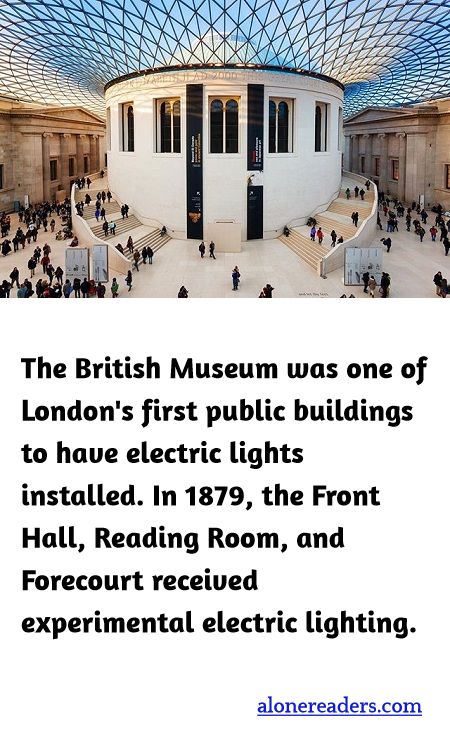
Electric lighting was a remarkable innovation in the late 19th century, forever changing the way buildings were illuminated and signaling the onset of a new technological era. Among the pioneers in adopting this groundbreaking technology was the British Museum in London, which became one of the city's first public buildings to install electric lights. This historical event took place in 1879 and included the installation of experimental electric lighting in the Front Hall, Reading Room, and Forecourt.
This transition to electric lighting at the British Museum was part of a broader movement during the period, as institutions and public spaces began to experiment with and gradually embrace electricity, moving away from gas and oil lamps, which were less efficient and more hazardous. The switch not only highlighted the museum's role as a leader in innovation but also significantly enhanced the visitor experience. Electric lighting provided a clearer, steadier light that better illuminated the museum’s vast collection, allowing for longer visiting hours and improved access to the exhibits during all seasons, regardless of natural light availability.
The installation process in 1879 involved fitting the designated areas of the British Museum with numerous electric lamps. This early form of electric lighting was likely rudimentary compared to today's standards and required careful handling and maintenance. Nonetheless, it marked an exciting leap into a new age of technological development, setting a precedent for other museums and public buildings around the world.
Moreover, this initiative not only improved the aesthetic appeal and functionality of the museum, it also played a crucial role in popularizing electric lighting among the general public. Visitors to the museum could witness firsthand the advantages of electric lights, and this experience likely contributed to wider public acceptance and enthusiasm for electrical technology.
Thus, the decision by the British Museum to install electric lighting was a significant reflection of Victorian innovation and progressiveness. It underscored the museum's commitment to enhancing cultural education through advanced technology, a philosophy that continues to guide its operations to this day. The move also had broader implications, influencing public infrastructure and technological advancement across London and the world, establishing the museum not just as a custodian of past cultures but also as a beacon of modernity and progress.
