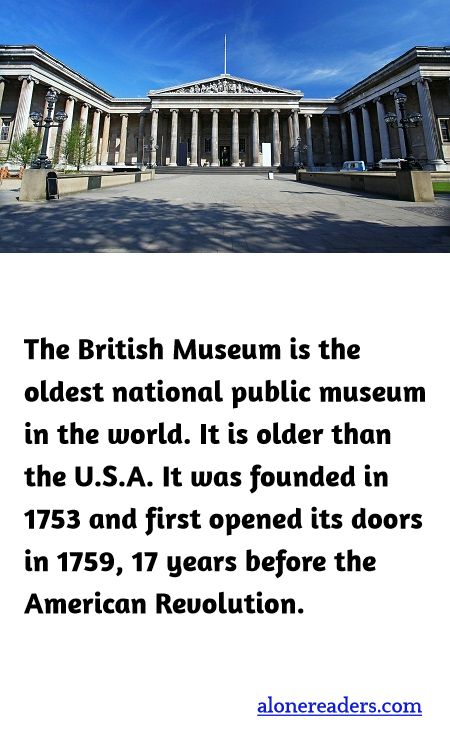
The British Museum, located in the heart of London, stands as a testament to the expansive and intriguing record of human culture and history. This venerable institution, established more than two and a half centuries ago, proudly bears the title of the oldest national public museum in the world. Founded in 1753 through the bequest of the collections of physician and scientist Sir Hans Sloane, it opened its doors to the public in 1759, on January 15th. This was a significant period predating the formation of the United States and the upheaval of the American Revolution, which began in 1776.
From its inception, the British Museum was conceived as a "universal museum," its mission being to document civilisations from all corners of the globe. Unlike older institutions that were private or accessible only to elite members of society, the British Museum was the first of its kind to open up knowledge to anyone seeking it, without charge. Its founding principle was that the collection should be preserved "not only for the inspection and entertainment of the learned and the curious but for the general use and benefit of the public."
The museum initially housed Sir Hans Sloane’s vast collection, which included over 71,000 items encompassing a wide range of objects, books, and antiquities from all over the world. These included significant items like manuscripts and prints, antiquities from Ancient Egypt, Greece, and Rome, as well as specimens from the natural world.
As time progressed, the British Museum expanded both its physical footprint and its collection. Notable acquisitions like the Rosetta Stone, brought to the United Kingdom after the defeat of Napoleon’s troops in Egypt, have made it a pivotal repository for shared global heritage and archaeology. The museum has also faced critique and controversy, particularly over its possession of artifacts such as the Elgin Marbles and the Benin Bronzes, which have spurred debates about cultural restitution and the ethics of historical collections.
Today, the British Museum remains one of the world's leading visitor attractions, and its collections encompass approximately 8 million works, demonstrating the breadth and complexity of human history and culture. Its role is not just as a custodian of the past, but as a place of research, learning, and understanding, continually relevant to a global audience. This institution not only reflects the historical precedents of collecting and exploring but also sparks conversations about the interconnectedness of world cultures and the common threads of human experience.
