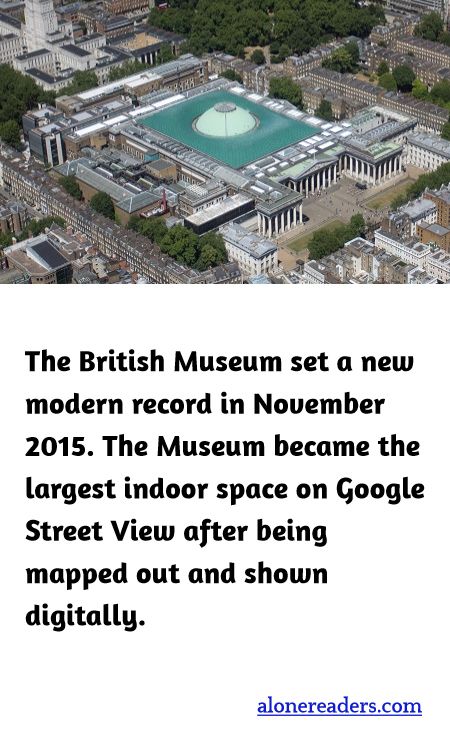
In November 2015, a significant digital milestone was achieved when the British Museum became the largest indoor space featured on Google Street View. This initiative allowed online visitors from around the globe to explore the sprawling museum from the comfort of their homes. The digital representation included an astonishing amount of detail, spanning multiple floors and showcasing thousands of artifacts for virtual viewing.
Google Street View’s project at the British Museum involved meticulously mapping its extensive corridors and numerous exhibits, embracing technology to make cultural education more accessible than ever. This integration not only marked a technological triumph but also set a modern record for the most expansive indoor area available on the platform at that time. It underscored a growing trend where significant historical and cultural institutions leverage digital tools to reach a broader audience.
The mapping process involved sophisticated photographic equipment and advanced mapping technology to capture the depth and breadth of the museum's interior. Every hall, gallery, and notable exhibit was digitally cataloged, providing an immersive experience that rivals a physical visit. This digital availability is particularly beneficial for those unable to visit London, offering a glimpse of iconic artifacts such as the Rosetta Stone, the Elgin Marbles, and the Egyptian mummies among many others.
Furthermore, this digital venture by the British Museum has set a precedent for other museums and cultural institutions worldwide, illustrating the potential of digital tools in preserving and sharing cultural heritage. It not only enhances visitor experience but also ensures that educational resources are more broadly disseminated, supporting the museum’s educational mission on a global scale.
Ultimately, the project between the British Museum and Google Street View not only created a new record but also highlighted the evolving relationship between technology and cultural preservation. As more institutions look to expand their digital presence, the success of the British Museum’s endeavor stands as a testament to the power of innovative partnerships in the digital age.
