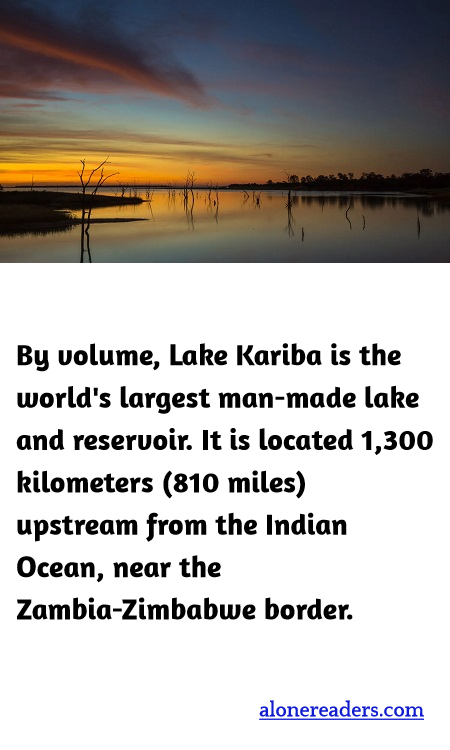
Lake Kariba is an impressive testimony to human engineering and a striking geographical feature situated along the Zambia-Zimbabwe border. This colossal man-made lake and reservoir, formed by damming the mighty Zambezi River in the late 1950s, holds the distinction of being the largest in the world by volume. Its creation was primarily for electricity generation, aiming to harness the river's power to fuel the growing energy needs of the region.
Spanning an expansive area and reaching depths of up to 97 meters, Lake Kariba's massive body of water covers over 5,580 square kilometers, with a storage capacity of about 180 cubic kilometers. It was a monumental project that required relocating large numbers of the local populace as well as wildlife, leading to subsequent environmental and ecological changes.
Today, Lake Kariba is not only a vital source of hydroelectric power for both Zambia and Zimbabwe but has also become a hub for tourism and recreation. The lake's picturesque landscape, framed by mountains and forests, attracts tourists from around the globe. Activities such as boating, fishing, and wildlife viewing are immensely popular, with the lake's shores and the surrounding areas providing habitat to a diverse range of animals including elephants, hippos, crocodiles, and a plethora of bird species.
However, the creation of Lake Kariba has not come without its challenges. The altering of the Zambezi's flow has impacted downstream ecosystems, and fluctuations in water levels can create difficulties for local wildlife and communities. Additionally, concerns about the aging infrastructure of the Kariba Dam itself pose ongoing risks. Efforts are continually being made to balance the human benefits of this massive water reservoir with the health of the surrounding ecosystems and the safety of the dam.
In essence, Lake Kariba is a marvel that exemplifies the complex interplay between nature and human development. It stands as a reminder of the capabilities of human ingenuity and the responsibilities that come with such large-scale environmental modifications.
