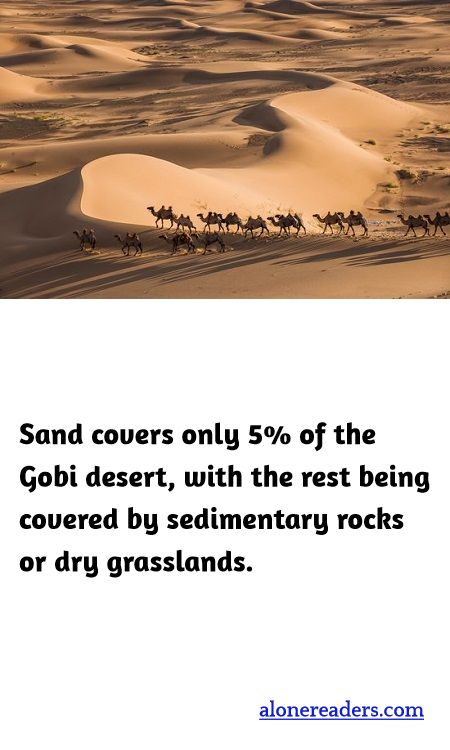
The Gobi Desert, often envisioned as a vast dune-filled landscape, is actually predominantly composed of features much different than the rolling sands many imagine. Surprisingly, sand dunes constitute only about 5% of the Gobi Desert's area. The vast majority of the Gobi, contrary to common perception, is covered by a variety of other geological and ecological features including sedimentary rocks and arid grasslands.
Sedimentary rocks in the Gobi are predominantly composed of materials like shale, sandstone, and limestone, bearing testament to the region's dynamic geological history. These rocks are often rich in fossils, including those of early mammals and dinosaurs, making the Gobi a significant site for paleontological research. The desert's extensive rock formations not only provide a record of Earth’s ancient past but also contribute to the unique and stark beauty of the landscape.
Aside from rocky areas, the Gobi Desert also features extensive dry grasslands. These grasslands are adapted to the extreme conditions of the desert, which can see temperature swings from searing heat in the summer to well below freezing in the winter. The vegetation in these areas is typically sparse and consists of hardy species that can tolerate the arid climate. These grasslands are crucial for the survival of various wildlife species indigenous to the Gobi, offering habitat and food sources.
The limited sand dunes that do exist in the Gobi are often spectacular and have become synonymous with the desert's image. They can rise to considerable heights and are shaped by the persistent winds that sweep across the plateau. The most famous of these, the Khongoryn Els, extends over 100 kilometers and reaches heights of up to 300 meters.
The diverse makeup of the Gobi Desert supports a surprisingly rich variety of life adapted to its harsh conditions, including the Bactrian camel, Gobi bears, and snow leopards. Nomadic herders also live in the Gobi, maintaining ancient lifestyles that have been adapted over centuries to cope with the challenging environment.
Understanding the real composition of the Gobi Desert helps in appreciating its complex natural history and the ongoing scientific and conservation efforts aimed at preserving this unique ecosystem. It also corrects the common misconception that deserts are merely vast expanses of sand, highlighting the diverse landscapes that our planet hosts.
