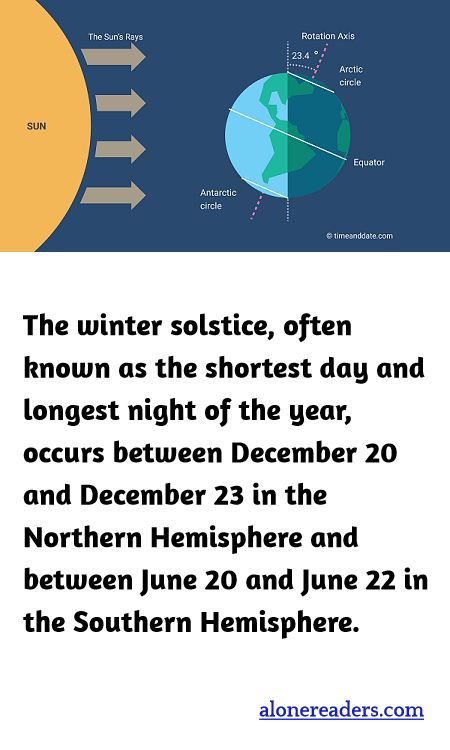
The winter solstice, a phenomenon deeply anchored in astronomical terms, marks a significant point in the Earth's journey around the sun. It usually occurs between December 20 and 23 in the Northern Hemisphere, whereas in the Southern Hemisphere, this event takes place between June 20 and 22. This event is characterized by the shortest day and the longest night of the year, corresponding to the hemisphere experiencing winter.
This solstice happens at the precise moment when the Earth's axial tilt is farthest from the sun. In the Northern Hemisphere, this results in the sun taking its lowest and shortest path through the sky on the solstice day. Conversely, for the Southern Hemisphere, the winter solstice occurs when the sun is at its lowest arc in the sky, mirrored by its occurrence six months apart from its Northern counterpart.
Cultures around the world have recognized the significance of the winter solstice and have marked it with various traditions and celebrations. For example, in ancient times, people observed it as a period of renewal and rebirth. Many contemporary celebrations stem from these age-old traditions, which view the solstice as a time of deep reflection, festivity, and anticipation of the return of lighter days.
From a scientific standpoint, the winter solstice is a key turning point in the seasonal cycle. Following the winter solstice, the days begin to grow longer, indicating the slow return of spring and warmer weather. This gradual increase in daylight continues until the summer solstice, when the trend reverses.
In sum, the winter solstice is not just an astronomical occurrence based on the position and tilt of the Earth; it's also a time imbued with cultural, historical, and emotional significance, marking a moment of transition and hope in the natural cycle of the seasons.
