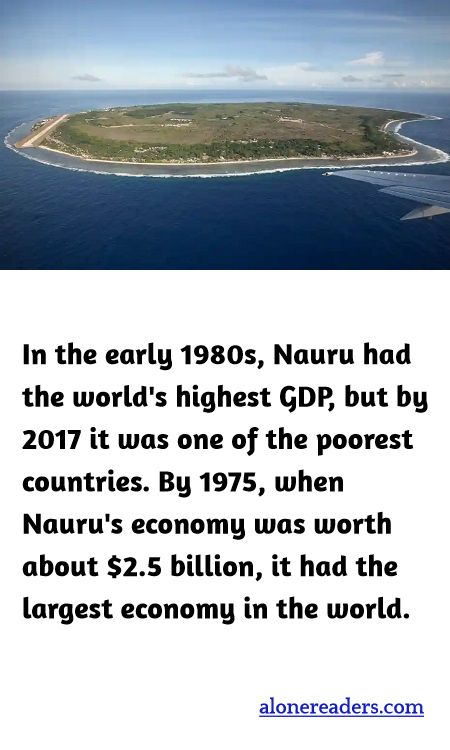
In the early 1980s, Nauru experienced an economic zenith unlike any other, boasting the highest GDP per capita in the world. This financial boon was primarily due to its lucrative phosphate mining industry. Phosphate, used globally as a key component in fertilizer, was abundant on the island, and its extraction was immensely profitable. This tiny island nation in the Pacific enjoyed levels of wealth that were extraordinary, with revenues from phosphate mining allowing for lavish spending on public services and infrastructure.
However, the source of Nauru’s wealth was also the cause of its downfall. Phosphate reserves began to dwindle in the late 20th century, leading to a dramatic decline in income. By the 1990s, the economic situation was grim. The environmental impact of extensive mining had also taken a severe toll, leaving 80% of the island uninhabitable. Attempts to diversify the economy were largely unsuccessful, and financial mismanagement, including unwise investments abroad, exacerbated the economic downturn.
The situation in Nauru was further complicated by its reliance on imports for almost all supplies, from food to fuel, as the island's damaged landscape offered little in the way of natural resources. This dependency has made Nauru particularly vulnerable to global economic pressures. In an attempt to generate revenue, Nauru briefly became a tax haven and engaged in questionable financial practices, including selling passports and hosting offshore banking entities, which eventually attracted international condemnation and led to tightening of regulations.
By 2017, the repercussions of these choices were evident, with Nauru ranking among the poorest nations globally. The once-flourishing economy now faced substantial challenges, including high levels of debt, limited job opportunities, and significant health issues among its population due to the environmental destruction caused by phosphate mining. In recent efforts to stabilize the economy, Nauru has hosted asylum seeker detention centers as part of agreements with Australia, providing some financial relief, but this has also led to criticism regarding human rights concerns.
The story of Nauru is a compelling example of the complexities of resource-dependent economies and the potential for rapid economic decline if resources are not managed sustainably and if economic diversification is not achieved. It serves as a cautionary tale about the risks of exploiting natural resources without adequate consideration for the long-term economic and environmental health of a nation.
