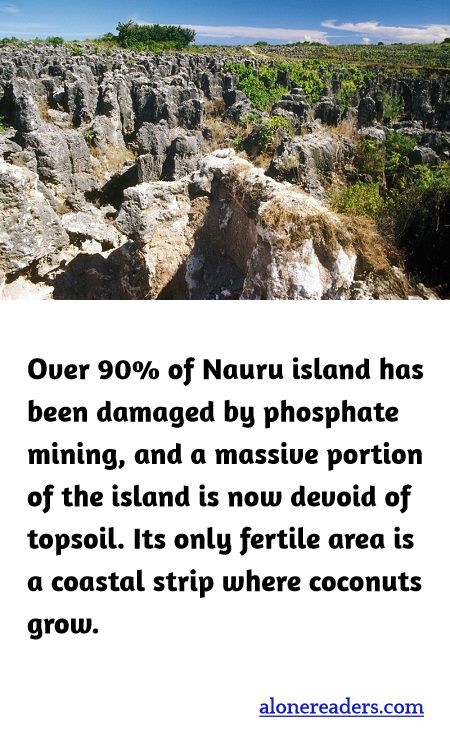
Nauru, once a lush Pacific island paradise, has been dramatically transformed by over a century of phosphate mining, which has left over 90% of its terrain barren and environmentally devastated. This intensive mining has stripped the island of its topsoil, making it nearly impossible for vegetation to grow in the interior areas. The result is a stark landscape, a sharp contrast to the tropical abundance that once thrived.
The only fertile area remaining on Nauru is a narrow coastal strip, where coconuts still grow, providing a critical resource for the local population. This strip is now the lifeline for the island's inhabitants, not just for the coconuts themselves but also because it stands as one of the last viable areas for any form of traditional agriculture. This situation poses severe challenges for food security and the economic stability of Nauru, heavily impacting the local lifestyle and economy that was once heavily supported by the natural bounty of the island.
The environmental degradation of Nauru raises significant concerns about sustainability and the long-term health of the island. The loss of fertile land has dramatic consequences for biodiversity, with the island's unique plant and animal life suffering immensely. Moreover, the situation in Nauru serves as a crucial lesson in the management of natural resources, highlighting the potential irreversible damage that can occur through exploitative industrial practices.
Efforts to rehabilitate the mined-out areas have been proposed, including importing topsoil and attempting to reintroduce native vegetation. However, these initiatives face significant logistical, economic, and environmental challenges, leaving the future sustainability of Nauru uncertain. As global awareness of environmental issues grows, the plight of Nauru underscores the urgent need for responsible mining practices and sustainable development strategies that protect and preserve natural environments while supporting local communities.
In conclusion, the environmental catastrophe in Nauru is a poignant reminder of the delicate balance between exploiting natural resources and maintaining ecological stability. It serves as a call to action for nations and corporations involved in similar mining activities worldwide, stressing the necessity of foresight and sustainability in environmental management practices to avoid replicating such a profound ecological and humanitarian crisis.
