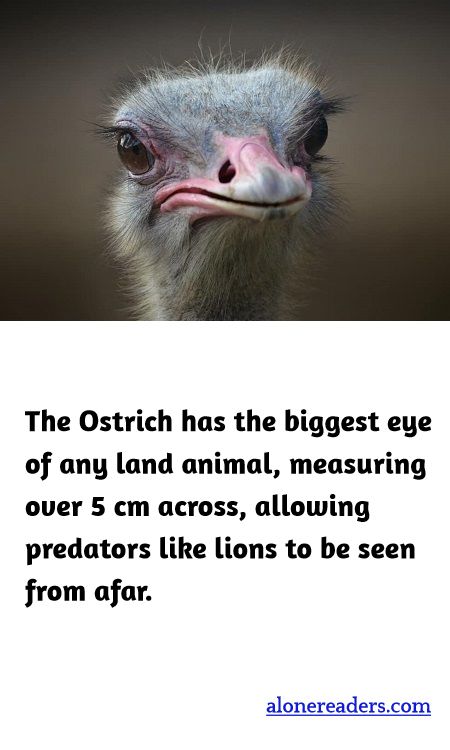
The ostrich, an avian giant that roams the African savannah and desert areas, holds a noteworthy biological record: it possesses the largest eyes of any land animal. Each eye can measure over 5 cm in diameter, comparable in size to a billiard ball. This remarkable trait offers a vital survival advantage in the hostile environments the ostrich inhabits.
Having large eyes is not just a quirky feature; it plays a crucial role in the ostrich’s ability to detect predators from great distances. The expansive, arid plains that make up the ostrich's habitat are also prowled by formidable predators such as lions and cheetahs. The ostrich's enhanced visual capacity allows it to spot these dangers from afar, giving it a valuable head start to flee or prepare for defense. This is particularly critical because, despite their size and strength, ostriches prefer to avoid confrontation through fleet-footed escape, reaching speeds of up to 60 kilometers per hour.
Furthermore, the large size of the ostrich’s eyes contributes to their sharp vision by allowing more light to enter, which is especially useful during dusk and dawn when light levels are low. This feature is crucial for early detection of threats or hurdles in their environment, including human activities that may encroach on their natural habitats.
Apart from its survival mechanisms, the visual acumen of the ostrich also benefits its social interactions within the species. It aids in recognizing mates and discerning behavioral cues from other ostriches, which is important for maintaining social hierarchies and group dynamics essential for nesting and rearing of young.
In conclusion, the ostrich’s large eyes are a perfect example of how evolution can equip a species with outstanding physical attributes that aren’t just fascinating in their extremity but are pivotal for survival. This adaptation not only allows the ostrich to maintain vigilance over its expansive habitat but also supports its complex social structures, showcasing a splendid alignment of biological form and function.
