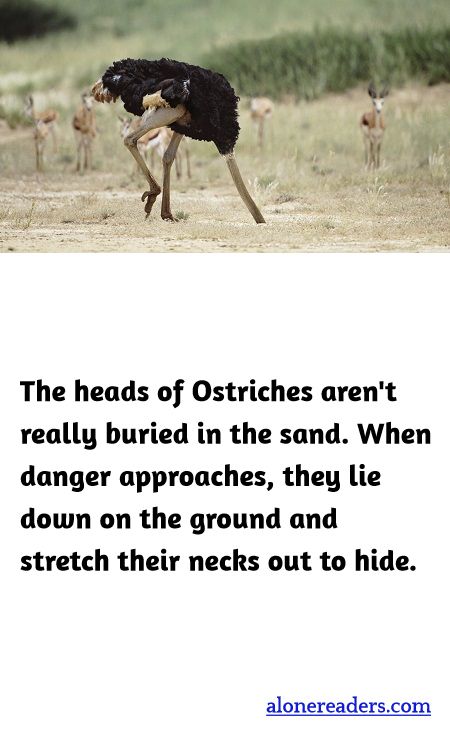
The myth that ostriches bury their heads in the sand when threatened has persisted for many years, conjuring images of the world’s largest bird foolishly trying to hide itself from predators. However, this common misconception does not hold up against scientific scrutiny. Instead, what ostriches actually do in the face of danger reveals a more complex and adaptive behavior.
Ostriches are native to the African savannah and desert lands, where they face threats from several predators, including lions and cheetahs. When threatened, an ostrich does not bury its head in the sand. This action would be biologically impractical and would suffocate the bird. Instead, ostriches have developed a different survival strategy. When they sense danger and cannot easily escape, they will often flop to the ground and lie flat. The color of their bodies blends with the sandy, rocky soil, providing camouflage. From a distance, this behavior makes it difficult for predators to spot them, as their heads and necks stretched out along the ground can look like a bush or a rock.
This behavior of the ostrich, like many aspects of animal behavior, is an adaptation to their environment. The flat, open terrain of their habitat does not offer much in the way of hiding places, so the ostrich's response to predators is a clever use of their natural surroundings and their physical appearance. Furthermore, ostriches are equipped with powerful long legs capable of delivering strong kicks to potential threats, and they can run at speeds of up to 60 miles per hour, which is often their first choice when avoiding predation.
Despite their impressive size and sometimes comical appearance, ostriches are survivors, adapted perfectly to their environment with behaviors that are far more rational and effective than the myths that surround them. Such misunderstandings highlight the importance of observing and studying wildlife to appreciate the true nature of animal behaviors and to dispel any myths that may obscure our understanding of these fascinating creatures.
