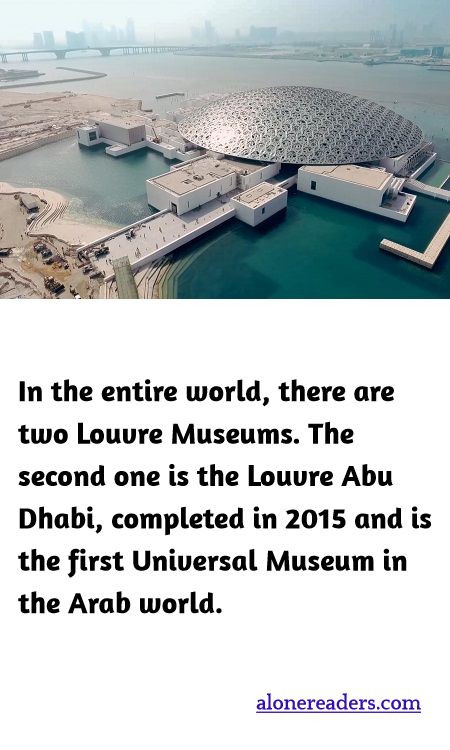
The Louvre Museum, originally established in Paris, France, is a landmark that signifies cultural heritage and artistic prowess globally. Its expansion led to the establishment of the second Louvre museum, the Louvre Abu Dhabi, which was completed in 2015. This museum represents a significant cultural bridge between the East and the West and is celebrated as the first Universal Museum in the Arab world, deepening the facet of cultural diplomacy.
The Louvre Abu Dhabi was born out of a unique collaboration between the governments of Abu Dhabi and France and was designed by renowned architect Jean Nouvel. The museum encapsulates a mini-city of art on the Saadiyat Island of Abu Dhabi, under a vast silvery dome that creates a rain of light effect, mimicking the overlapping patterns formed by date palm fronds traditionally used in local roofing. This architectural design not only stands out as a beacon of modernity but also deeply respects the region's ancient architectural traditions.
As the world's first universal museum in the Arab world, the Louvre Abu Dhabi serves a transnational narrative on the story of human creativity. It breaks from the tradition of Western-centric cultural dominance by showcasing a plethora of artifacts and artworks from various regions around the world, including Middle Eastern, Asian, and African. This collection underlines the shared human experience through art, fostering an inclusive narrative of global history and intersections.
The museum has gradually been enhancing its collection and has already become a pivotal point for art lovers and culture seekers globally. It operates under the philosophy that art and culture are universal human values, and it embodies this by offering a place for cultural exchange and dialogue. The Louvre Abu Dhabi not only showcases the beauty found in diversity but also educates the public about the extensive and interconnected history of human civilizations.
As a crossroads of art and culture, the Louvre Abu Dhabi furthers understanding and appreciation across different traditions and histories, potentially playing a crucial role in bridging gaps in a geopolitically tense region. Through its exhibitions and educational programs, it continues to invite a global audience to view our collective social fabric laid out through artistic expression over millennia. This significant cultural institution not only expands the geographical outreach of the Louvre brand but also contributes a rich layer to the international arts and cultural landscape, reinforcing the power of art in uniting people across different backgrounds and beliefs.
