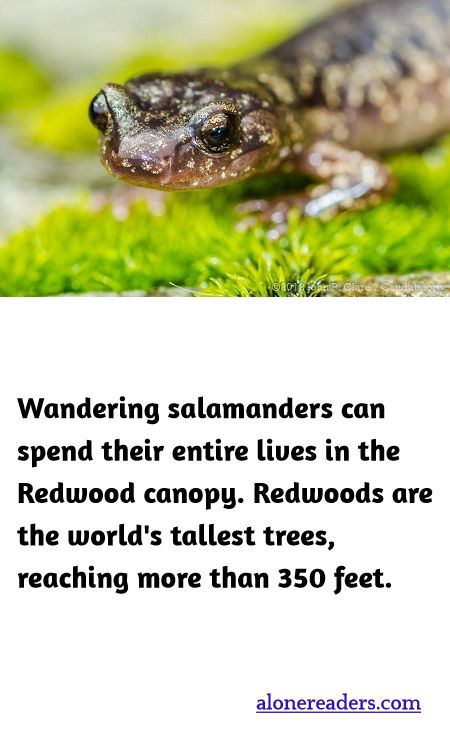
The wandering salamander (Aneides vagrans) is a remarkable creature that has captivated biologists and nature enthusiasts alike by its ability to thrive in one of the most unique ecosystems on the planet—the Redwood canopy. Redwoods, notably famous for being the tallest trees in the world and predominantly found along the Pacific Coast of the United States, create a vertical world that reaches heights exceeding 350 feet. This incredible altitude not only offers an unparalleled habitat but also forms a vital ecological niche.
Within these lofty heights, the wandering salamander has adapted extraordinarily. Unlike many other salamander species that are commonly found on the ground or in aquatic environments, wandering salamanders have made the canopies of Redwoods their exclusive home. They can spend their entire lives without ever descending to the earth below. This is particularly fascinating given the challenges posed by such a habitat, including limited food sources, variable temperatures, and the risk of falling.
In the dense tangle of branches and tree trunks, the wandering salamander hunts for small insects and other invertebrates, which are abundant in the canopy. Its long, slender body and grippy toes make it an adept climber, while its camouflage helps it avoid predators. One of the most astonishing features of the wandering salamander is its ability to survive falls from the trees, an adaptation crucial to living at such heights.
Furthermore, these salamanders play a critical role in the Redwood ecosystems. As predators, they help control the populations of insects, ensuring a balanced ecosystem. Moreover, their presence in the canopy contributes to nutrient cycling, which is pivotal for the health of these giant trees.
The life cycle and behaviors of wandering salamanders also highlight the interconnectedness of the Redwood forest ecosystem. They are an indicator species, meaning changes in their population can reflect broader environmental changes that could impact the health of the Redwood forests. This makes them a key species for ecological studies and conservation efforts.
Conservation of Redwood forests is essential not only to preserve these ancient giants but also the myriad of life forms like the wandering salamander that rely on this habitat. With ongoing threats such as logging, climate change, and habitat fragmentation, it is increasingly important to recognize and protect the intricate web of life these forests support. The wandering salamander, in coexistence with the Redwood trees, exemplifies the beauty and complexity of evolution and ecological adaptation.
