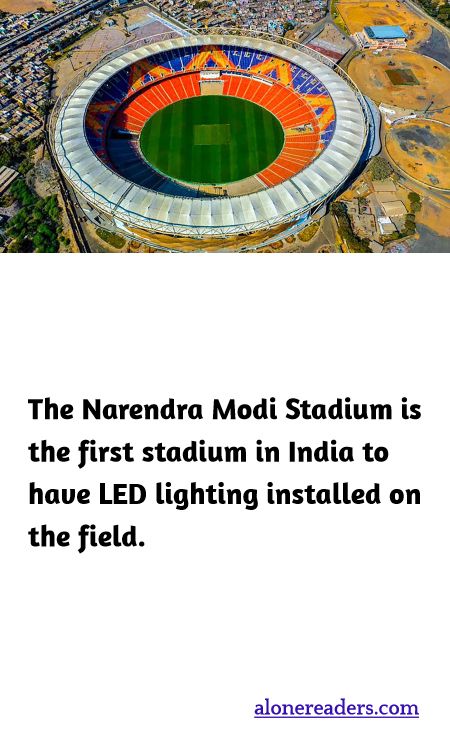
In an era where sustainability and innovation play key roles in infrastructure development, the Narendra Modi Stadium in Ahmedabad, India, stands out for its groundbreaking use of LED lighting, marking it as the first stadium in India to be equipped with this technology on the field. This significant upgrade not only enhances the visual experience but also exemplifies the shift towards energy-efficient solutions in sports arenas.
Located in the sports enclave of Motera in Ahmedabad, the Narendra Modi Stadium, previously known as Sardar Patel Stadium, was revamped to become the world's largest cricket stadium with a seating capacity approaching 132,000. The introduction of LED lighting is one of its many impressive features. Unlike traditional lighting, LED lights provide clearer, more consistent, and more controllable illumination, which is essential in a sport like cricket where visibility plays a crucial role in both player performance and fan experience.
The decision to install LED lighting aligns with broader environmental goals, as LEDs consume significantly less energy compared to conventional lighting systems. This is particularly important in a country like India, where large-scale events and operations can have considerable impacts on energy consumption. The stadium’s adoption of LED lights not only sets a new standard in energy efficiency but also reduces the heat emitted, creating a more comfortable environment for both players and spectators.
Moreover, LED lights can be turned on and off instantly and have a much longer lifespan, which reduces maintenance costs and ensures that games can continue without delays caused by lighting issues. This is crucial for hosting international events, which require standards that can accommodate high-definition broadcast needs. The clarity and precision of LED lighting ensure that all actions are captured with minimal distortion, making it ideal for replays and decisions during crucial moments of the game.
This pioneering move by the Narendra Modi Stadium has set a benchmark for other stadiums in India and around the world, pushing more sports venues to consider how technology and sustainability can coexist and enhance the sporting experience. Such initiatives not only promote environmental responsibility but also support the growth of sports by improving the quality of play and spectatorship. As this trend continues, it is expected that more stadiums will adopt similar innovations, transforming the way sports are viewed and played across the globe.
