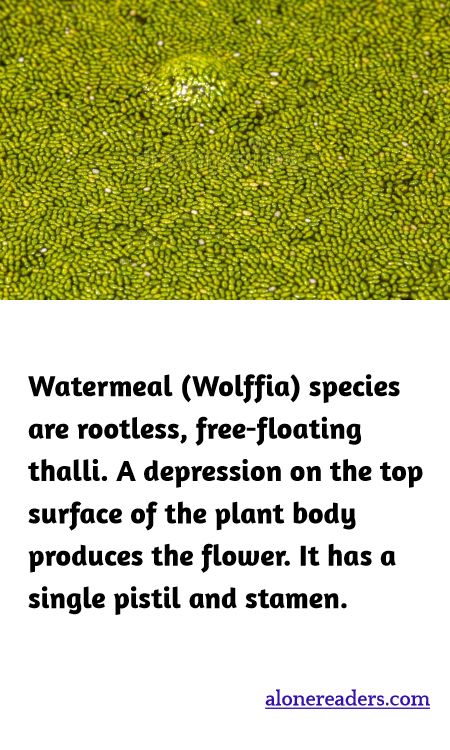
Watermeal, scientifically known as Wolffia, is a striking example of nature's minimalist design. This genus includes some of the smallest flowering plants known to science. Characterized by their lack of roots and incredibly small size, Wolffia species are most commonly found floating freely on the surface of calm freshwater bodies like ponds, marshes, and slow-moving streams. Each plant, or thallus, is tiny, typically less than a few millimeters in size, making it easy to overlook but fascinating upon closer inspection.
The structure of Wolffia is remarkably simple. Each thallus is a solitary green speck, often mistaken for specks of duckweed, to which it is closely related. Unlike most plants, Wolffia lacks roots, relying instead on the absorption of nutrients directly from the water through its surface area. This adaptation enables them to thrive in nutrient-rich aquatic environments where they can often outcompete other plants by rapid reproduction.
Reproduction in Wolffia is primarily vegetative, with each plant capable of dividing and producing a new thallus. This can lead to very rapid population expansion under optimal conditions. In addition to asexual reproduction, Wolffia also has a unique flowering strategy. Each thallus has the capacity to produce a single, tiny flower, embedded in a depression on its top surface. This flower is one of the smallest in the plant kingdom, typically consisting of only one pistil and stamen. Due to its minuscule size, the process of pollination and subsequent seed production in Wolffia is a delicate affair, often facilitated by water movement or insects.
Ecologically, Wolffia plays a significant role despite its diminutive size. It provides a habitat for a plethora of microorganisms and small aquatic animals. By forming dense mats on the surface of water bodies, it can also help reduce water evaporation and contribute to the control of algae blooms by shading the water and competing for nutrients. However, in some environments, excessive growth of Wolffia can become problematic, leading to issues such as obstruction of waterways and impacts on water quality.
Understanding and appreciating Wolffia's unique biology and ecological roles opens a window into the complex interactions within freshwater ecosystems. Its ability to thrive in diverse aquatic habitats, combined with its rapid growth rate, makes it an intriguing subject of study in the fields of botany, ecology, and even environmental management.
