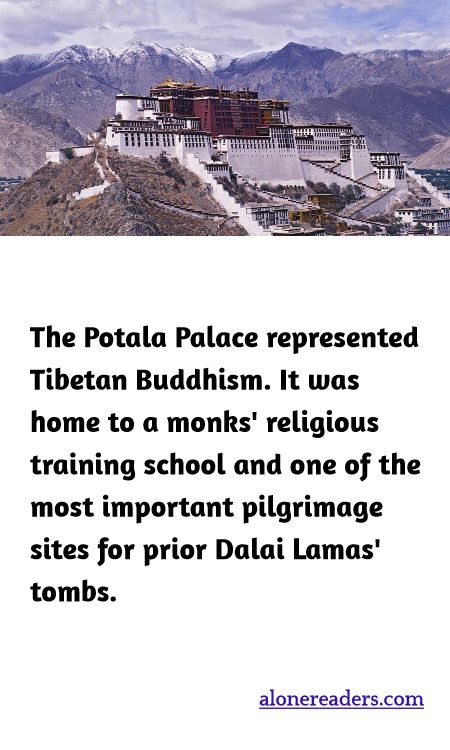
Perched on Marpo Ri hill at an altitude of 3,700 meters, the Potala Palace is not only an architectural marvel but also a symbol of Tibetan Buddhism. Initially built by King Songtsen Gampo in the 7th century, the palace was greatly expanded in the 17th century by the 5th Dalai Lama. This grand edifice in Lhasa, Tibet, blends the defensive architecture of a fortress with the intricate beauty of a spiritual sanctuary. Its towering walls, made from rammed earth and stones, and its roofs covered in gold, make it an awe-inspiring sight that can be seen from miles around.
The Potala Palace served multiple roles through its history, the primary being the winter residence of the Dalai Lamas until the 14th Dalai Lama's exile in 1959. Tradition and governance were deeply intertwined within its walls, as it housed offices, the court of Tibet, and numerous chapels. Among the most significant aspects of the palace are its religious functions. The Red Palace, part of the larger complex, contains several stupas (burial mounds) that hold the remains of previous Dalai Lamas. Each stupa is an elaborate work of art, made from precious metals and stones, and serves as a crucial pilgrimage site, drawing devotees who come to seek blessings and pay homage.
The Potala Palace also housed a unique religious training school for monks. This religious school was integral to the maintenance and development of Tibetan Buddhism, focusing heavily on the teachings of the Dalai Lamas and the practice of Mahayana Buddhism. Potala's chapels and prayer halls are adorned with thousands of statues, murals, and manuscripts, making it a treasure trove of Tibetan religious art and literature.
For tourists and pilgrims alike, a visit to the Potala Palace is a profound experience. The intricate murals and exquisite artworks weave tales of divinity, while the serene ambiance of its ancient halls induces a sense of peace and reverence. The Potala Palace stands as a testament to the spiritual practices of Tibetan Buddhism, preserving centuries-old traditions despite the challenges of modern times. It remains one of the most stunning and sacred places in the world, representing a bridge between the divine and the mundane, the past and the present of Tibetan spirituality and culture.
