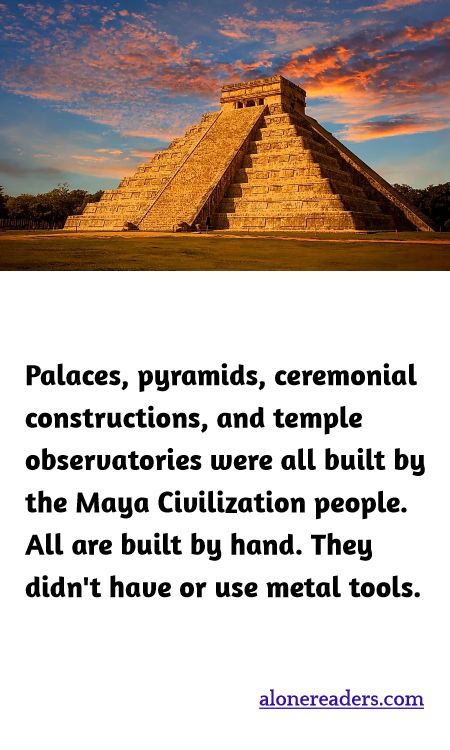
The architectural achievements of the Maya Civilization are as staggering as they are inspiring. Flourishing in regions of present-day Mexico, Belize, Guatemala, and Honduras from as early as 2600 B.C., the Maya were adept at creating incredible structures that have withstood the test of time. Notable for their absence of metal tools, the Maya relied on stone, wood, and bone to construct their buildings, including majestic palaces, sprawling pyramids, ceremonial platforms, and temple observatories.
The construction of these structures was a feat of engineering and human effort. Palaces were often expansive, multi-storied buildings that housed the elite and were centers for administrative activities. Pyramids, perhaps the most iconic of Maya structures, served primarily as temples and were meticulously designed: their steps aligned with astronomical events such as equinoxes and solstices. This alignment underscores the Maya’s keen astronomical knowledge, which was also reflected in their temple observatories. These structures were not only religious hubs but also served as positional points for celestial observation, helping the Maya track planetary movements, create calendars, and plan agricultural and ceremonial events.
The precision with which these structures were built, without the aid of metal tools, is remarkable. The Maya utilized materials readily available in their environment — primarily limestone, which was abundant in the Yucatan Peninsula. They used stone tools to quarry and shape the limestone, and created mortar using burnt lime. Detailed carvings and inscriptions were often added to these structures, depicting rulers, gods, and various symbolic motifs that played significant roles in Maya culture.
Moreover, the layout of Maya cities reflects a sophisticated sense of urban planning and symbolic order. This included sacbeob (white stone roads) that connected major city centers with outlying areas, enabling both trade and military mobilization. Water management systems, crucial for the sustenance of large populations, were also ingeniously developed, showcasing an advanced understanding of civil engineering.
The ceremonial constructions often featured altars, stelae, and massive stone platforms used for a variety of public and religious purposes. These spaces served as convergence points for the Maya community, highlighting the interconnectedness of ritual and daily life.
The legacy of Maya architecture is evident not just in their monumental constructions but in their ability to integrate their spiritual beliefs, astronomical knowledge, and everyday needs into their built environment, all without the technology that many modern societies consider essential. The durability and complexity of their constructions continue to attract admiration and curiosity from architects, historians, and travelers from around the world.
