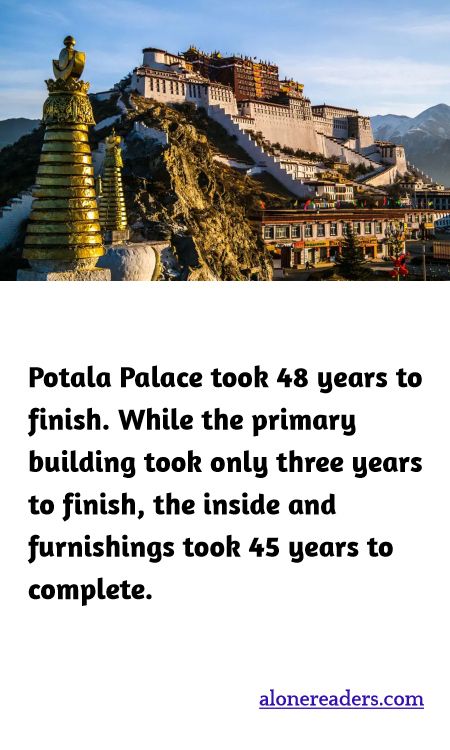
Perched on Marpo Ri hill, 130 meters above the Lhasa valley, the Potala Palace is not just a grand architectural feat but also a symbol of Tibetan spirituality and history. Originally built by King Songtsen Gampo in the 7th century, the palace we see today primarily dates back to the 17th century, when the 5th Dalai Lama rebuilt and expanded it into its current form. This imposing structure served as the winter palace of the Dalai Lamas until 1959, combining administrative offices, chapels, and living quarters, thereby serving both religious and governmental roles.
The construction of the Potala Palace is indeed a study in patience and dedication to craftsmanship. The initial structure was erected relatively quickly, in just three years, highlighting the efficiency and expertise of the builders. However, the interiors, which include intricate murals, beautiful statues, and elaborate furnishings, required an additional 45 years of meticulous work to complete. This extended period underscores the immense care taken in the artistic and spiritual detailing within the palace.
Each room within the palace is richly decorated, often with religious and cultural motifs that are important to Tibetan Buddhism. The walls are adorned with murals that depict various aspects of Tibetan life, as well as important Buddhist teachings and events. These artworks serve as both a religious expression and a historical document, offering insight into centuries of Tibetan culture.
Furthermore, the Potala Palace is an architectural marvel, constructed with locally sourced materials like wood and stones, and adapted perfectly to the harsh conditions of the Tibetan plateau. The whitewashed outer walls not only give the palace its distinctive appearance but also reflect sunlight, helping to illuminate its structure against the stark, mountainous backdrop. Meanwhile, the interiors are built to retain warmth during the freezing winters, demonstrating an ingenious approach to climatic challenges.
Today, the Potala Palace stands as a UNESCO World Heritage Site, attracting thousands of visitors who come to marvel at its grandeur and dive into the deep spiritual heritage of Tibet. The palace not only continues to be a testament to the architectural prowess and artistic vision of its creators but also serves as a poignant symbol of the cultural and religious resilience of the Tibetan people. Visitors to the palace can't help but be moved by the palpable sense of history and spirituality that permeates this magnificent structure.
