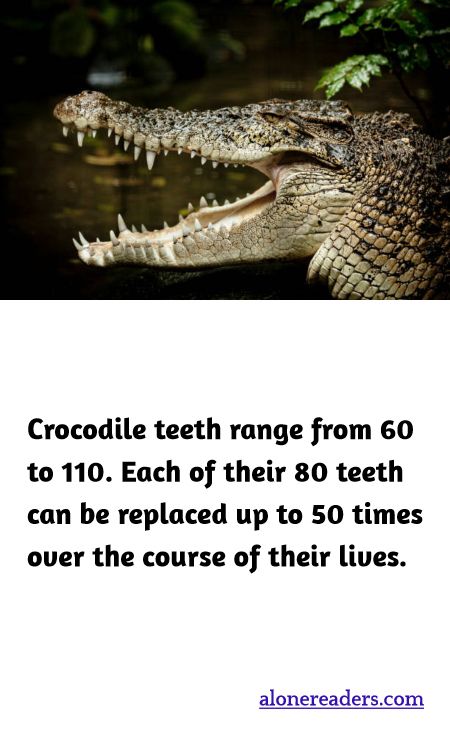
Crocodiles are among the most ancient and formidable predators on the planet, and their teeth play a pivotal role in their hunting and survival strategies. A fully grown crocodile can have anywhere from 60 to 110 teeth in its powerful jaws at any given time. The exact number can vary among species and individual crocodiles.
What's even more fascinating about crocodile dentition is its regenerative capability. Unlike humans, whose teeth are replaced only once in a lifetime (from baby to permanent teeth), crocodiles can regrow each of their 80 teeth up to 50 times throughout their lives. This regenerative process is crucial, as it allows them to maintain their effectiveness in catching and processing prey despite frequent tooth loss due to wear and tear.
Crocodile teeth are conical and sharp, designed to grasp and hold onto slippery prey like fish, but also tough enough to tear through the hide and flesh of larger animals like zebras or wildebeest. Each tooth is rooted in a socket in the jawbone, which is what makes them so sturdy. When a tooth is lost, a small replacement tooth, called a 'successional tooth,' is already waiting in the wings below the gums to take its place. This new tooth gradually moves into the primary position as it matures.
This incredible dental resilience helps ensure crocodiles remain effective predators throughout their long lifespans, which can extend up to 70 years or more in the wild. Given their crucial role in ecosystems as apex predators, the ability to constantly renew their teeth helps maintain the balance of the habitats in which they live.
The biological mechanisms behind the crocodiles' tooth regeneration involve stem cells and are a subject of interest among scientists and researchers. Understanding how these powerful creatures can continuously replace their teeth may have implications in human medicine, particularly in research related to tooth decay and regenerative therapies. As we continue to study these remarkable reptiles, we not only gain insight into their survival strategies but also potential breakthroughs for dental medicine advancements.
