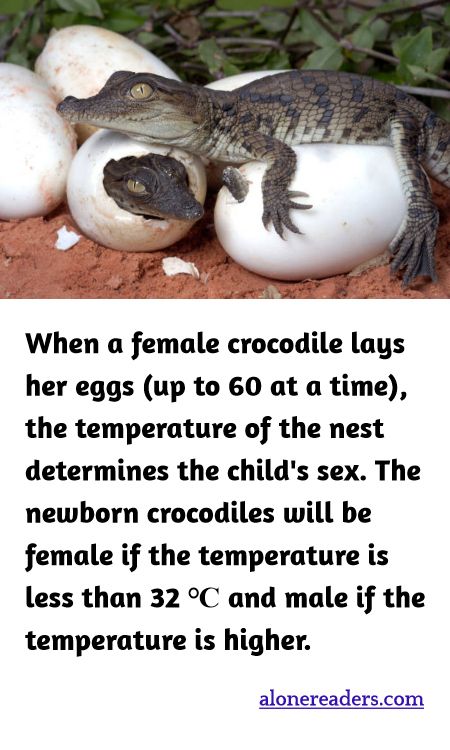
Crocodiles have a fascinating reproductive strategy that highlights the critical role of environmental factors in determining the characteristics of their offspring. In the case of crocodiles, the temperature at which eggs incubate plays a crucial role in determining the sex of the young. When a female crocodile lays her eggs, she can deposit up to 60 eggs in a single nesting event. These eggs are then buried in either vegetation or sand, where they incubate for about 65 to 90 days before hatching.
The sex of the emerging hatchlings depends not on genetic factors, as in most mammals, but rather on the temperature of the nest, a phenomenon known as temperature-dependent sex determination (TSD). Specifically, in crocodiles, temperatures below 32 degrees Celsius typically produce female hatchlings, while temperatures above this threshold favor the development of males. The pivotal temperature range where the nest can produce both males and females is typically quite narrow, and slight variations in temperatures can lead to significantly skewed sex ratios.
This unique form of sex determination suggests a fine balance with nature, as the temperatures during the critical period of incubation can be influenced by external environmental conditions such as shading, humidity, and the nest's material. Moreover, this temperature sensitivity hints at potential vulnerabilities due to climate change. Increased temperatures could lead to disproportionate numbers of male crocodiles, potentially impacting population dynamics and stability.
The dependence of crocodile sex determination on temperature also has significant implications for conservation efforts. Understanding how temperature influences sex ratios can help in the management and conservation of crocodile populations, ensuring their sustainability and genetic diversity. Efforts to manage nesting sites to maintain a balanced sex ratio might become crucial as global temperatures continue to rise, showcasing yet another link between wildlife conservation and the broader impacts of environmental change.
