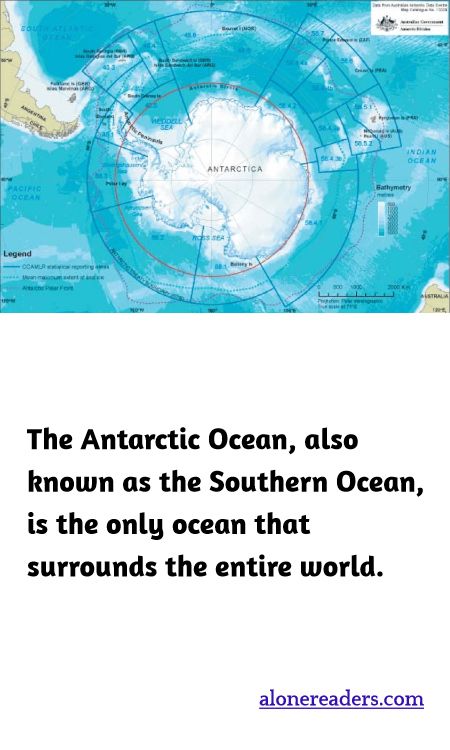
The Antarctic Ocean, commonly referred to as the Southern Ocean, encircles Antarctica and is unique as it is the only ocean that extends all the way around the Earth. Recognized in 2000 by the International Hydrographic Organization as the fifth ocean, it differs from other oceans primarily because it is defined by a current rather than landmass boundaries.
At the core of the Antarctic Ocean's uniqueness is the Antarctic Circumpolar Current (ACC), the planet's strongest and most voluminous current, which flows from west to east around Antarctica. This current is crucial in influencing global climate patterns by connecting the Atlantic, Pacific, and Indian Oceans, and thus allowing deep water exchange and significant heat transfer.
The Southern Ocean is a vital component in Earth’s climate system. It is instrumental in driving the global thermohaline circulation, often referred to as the ocean’s conveyor belt, which plays a key role in regulating the Earth’s climate and weather patterns. The cold, nutrient-rich waters that rise from the deep ocean to the surface here support abundant marine ecosystems and wildlife, including various species of penguins, seals, and whales. These waters also absorb significant amounts of carbon dioxide from Earth's atmosphere, helping to mitigate the impacts of climate change.
Despite its remote location, the Antarctic Ocean faces numerous environmental threats. Overfishing has impacted populations of key species like the Patagonian toothfish, and climate change is resulting in rapid warming and freshening of surface waters, which can disrupt marine habitats. The melting of the Antarctic ice sheet, spurred on by global warming, also contributes to rising global sea levels, posing a threat to coastal communities worldwide.
Preservation efforts are ongoing, with international agreements like the Commission for the Conservation of Antarctic Marine Living Resources (CCAMLR) aimed at managing marine resources sustainably. Moreover, vast areas of the Southern Ocean have been designated as Marine Protected Areas (MPAs) to safeguard the diverse ecosystems and species they support.
Understanding and protecting the Antarctic Ocean is crucial not just for maintaining biodiversity but also for the health of the global environment. Its role as a natural laboratory offers invaluable insights into climate change, oceanographic processes, and ecological dynamics that are essential for informed environmental policies and conservation strategies.
