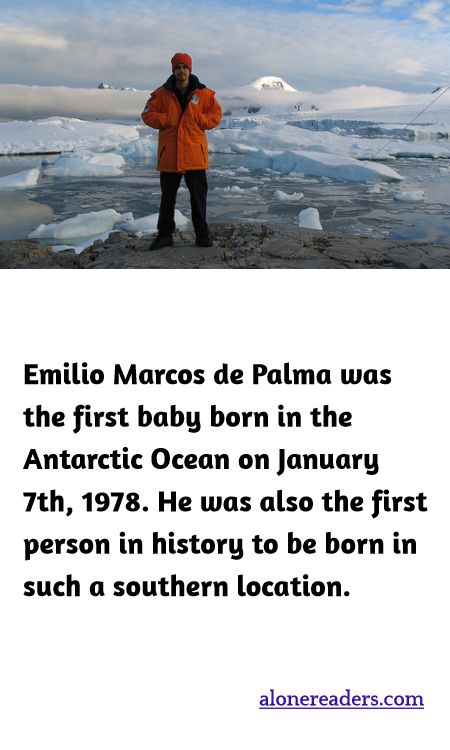
Emilio Marcos de Palma holds the unique distinction of being the first baby born on the Antarctic continent. His birth on January 7, 1978, at the Argentine Esperanza Base situated on the tip of the Antarctic Peninsula, marked an unprecedented event not just in Antarctic history but also in human record. This milestone was part of a concerted Argentine effort to solidify claims to a portion of the icy continent. Antarctica, governed by the international Antarctic Treaty System which prohibits military activity and affirms scientific research, does not officially belong to any one nation. However, several countries, including Argentina, have laid territorial claims that are acknowledged by few.
By sending pregnant women to the continent to give birth, Argentina aimed to strengthen its claim by establishing an indigenous population. Emilio’s birth was a product of this strategy. His parents, Captain Jorge Emilio Palma and his wife Silvia Morella de Palma, were part of a group of Argentine nationals living at the Esperanza Base, which includes research facilities and full-time residential amenities. Their life on this inhospitable continent underscores Argentina’s resolve to have a permanent, family-friendly presence there.
From a broader perspective, Emilio’s birth propelled discussions on the interplay between geopolitics and human rights, focusing on how nations utilize human lives to assert sovereign claims. Moreover, it highlighted the challenging conditions faced by those who live year-round in one of the most extreme environments on Earth, conducting scientific research that provides critical insights into global climate patterns and environmental change.
Today, although Emilio Marcos de Palma may not reside on the icy continent, his birth in Antarctica remains a significant footnote in the narrative of this remote and rugged landscape—a reminder of the lengths to which countries will go to lay claim to the Earth's last uncharted territories.
