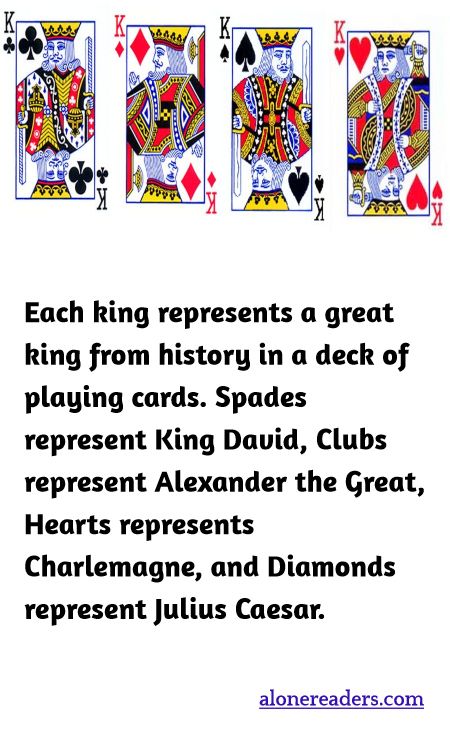
In the rich tapestry of card games, the imagery on playing cards is not just a matter of artistic expression but also a reflection of historical figures and events. A deck of cards is like a miniature encyclopedia of historical lore, with the kings of each suit representing several of the greatest rulers of the ancient and medieval worlds. The symbols on the cards – spades, clubs, hearts, and diamonds – each correspond to notable monarchs, encapsulating their legacies in a form that has transcended centuries of play.
The King of Spades, often seen wielding a sword, represents King David, the revered ruler of Israel, known for his myriad accomplishments as a warrior, leader, and psalmist in the Bible. The portrayal is apt, symbolizing authority and wisdom, qualities exemplified by David's historic reign and his lasting influence on religious and monarchical traditions.
Meanwhile, the King of Clubs depicts Alexander the Great, the Macedonian conqueror famous for his unprecedented military successes that created one of the largest empires of the ancient world. The club, a symbol traditionally associated with clovers and warriors' prowess, is a fitting representation for Alexander, whose tactical genius and indomitable spirit brought him eternal fame as one of history’s most legendary commanders.
The suit of Hearts features Charlemagne, or Charles the Great, whose kingdom laid the foundations for modern Europe. As King of the Franks, he was instrumental in reviving arts, culture, and governance through the Carolingian Renaissance. The heart as his symbol reinforces his reputation as a unifier and a benevolent ruler, celebrated for his contributions to the enlightenment of his society and promoting Christian values throughout his vast empire.
Lastly, the King of Diamonds is attributed to Julius Caesar, the Roman dictator whose political and military acumen brought about the end of the Roman Republic and the rise of the Roman Empire. Diamonds, symbolizing wealth and invincibility, perfectly encapsulate Caesar’s legacy as a formidable leader whose influence reshaped the Western world.
These kings, immortalized in decks of playing cards used all around the globe, serve not only as a means of entertainment but also as custodians of history, each suit telling a story of power, conquest, unity, and leadership. The choice of these particular rulers highlights their indelible impact on world history and their timeless relevance, reflected subtly in the strategic and skillful games that cards afford. Thus, every card game becomes a quiet reflection on the nature of power and the complex legacies of four of history's most iconic rulers.
