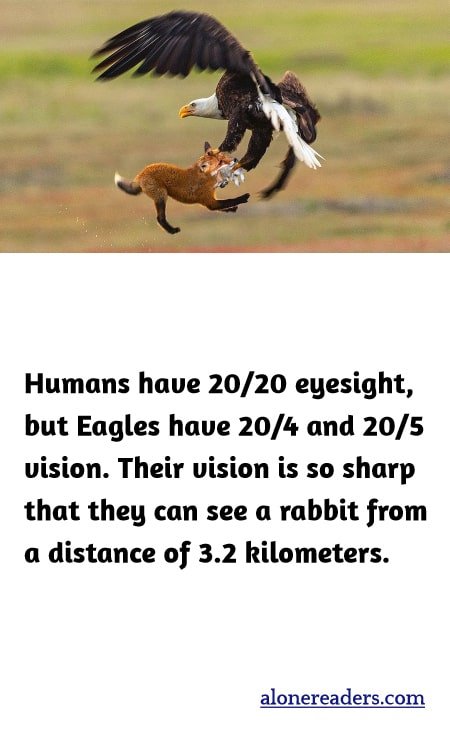
Eagles are often celebrated for their incredible eyesight, which notably surpasses human visual capabilities. Humans typically can have, under the best conditions, what is known as 20/20 vision. This label means that a person can see what an average individual is expected to see on an eye chart from 20 feet away. In contrast, eagles have 20/4 and 20/5 vision, suggesting a far superior level of visual acuity. This level of sharpness allows them to spot objects as small as a rabbit from a distance as far as 3.2 kilometers away.
The secret behind an eagle's extraordinary eyesight lies in its unique anatomical features. Eagles have larger eyes in proportion to their heads compared to humans. More importantly, their retinas are densely packed with sensory cells called cones, which are crucial for detecting fine details and differentiating colors during daylight. The fovea, a small depression in the retina where visual acuity is highest, is particularly well-developed in eagles. In fact, eagles possess a deep fovea that acts almost like a natural telephoto lens, allowing them to magnify the center of their visual field, where the prey is likely to be.
This incredible vision is essential for their survival, as it plays a critical role in hunting and navigation. When an eagle soars high above the ground, it needs to be able to spot small prey animals like rabbits or fish from large distances. Once the prey is spotted, the eagle uses its keen sight to track and follow its movements until it is close enough to attack.
The remarkable acuity of eagle vision also facilitates their impressive flight abilities. They can navigate and adjust their flight patterns based on what they observe from great heights, such as the layout of the terrain below or the movements of other birds and predators in the area.
Eagle vision has been a subject of admiration and study, highlighting not only the wonders of nature but also inspiring technology. For instance, advances in cameras and optical technology often take cues from the biological mechanics of eagle eyes, aiming to develop devices that can mimic this high level of clarity and magnification. This intersection of biology and technology showcases the ongoing relevance and impact of understanding animal senses like that of the eagle. Their phenomenal vision not only underscores their status as formidable predators but also reflects the intricate design and adaptability of nature’s creations.
