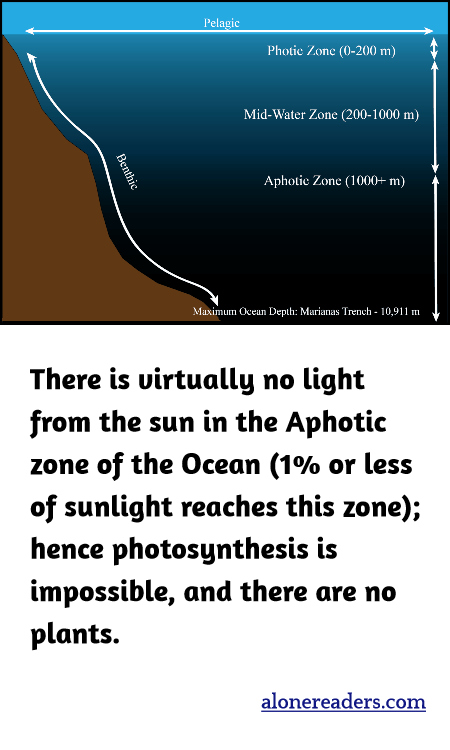
The aphotic zone of the ocean, a mysterious and alien realm, begins approximately 200 meters below the surface where sunlight begins to dwindle, plunging this underwater world into perpetual darkness. In the absence of sunlight, photosynthesis is not an option, creating an environment devoid of plants, which require light to generate food and energy.
Instead, the ecosystem in the aphotic zone is supported by a food chain that begins with the detritus falling from the upper layers of the ocean, such as dead organisms, feces, and other organic materials commonly referred to as "marine snow." This constant drizzle from above provides the necessary nutrients for a variety of specially adapted creatures that have evolved to survive in these deep, dark waters.
These organisms include a range of unique species such as bioluminescent fish, which produce their own light through chemical reactions to attract prey or find mates. Others, like certain types of squids and octopuses, have developed enhanced sensory organs to detect food and predators in the darkness. Similarly, scavengers and decomposers thrive by consuming the sinking debris from the ocean's more sunlit layers.
Moreover, the aphotic zone is not uniformly lifeless and void of movement but is intricately connected to the rest of the ocean. It plays a crucial role in the global carbon cycle and acts as a critical buffer in Earth’s climate system. Deep-sea currents in this zone help in transporting nutrients and carbon throughout the ocean, thus supporting life forms even in these remote, extreme conditions.
Intriguingly, despite its harsh conditions, recent scientific explorations have revealed that the aphotic zone teems with life, demonstrating a complexity and resilience that challenges our understanding of life on Earth. Each discovery in this zone provides valuable insights into biodiversity and the adaptability of life forms, offering a broader understanding of biological, geological, and chemical processes. Thus, the aphotic zone remains a vital area of research, harboring potential answers to many scientific questions and continuing to fascinate with its mysteries and extremities.
