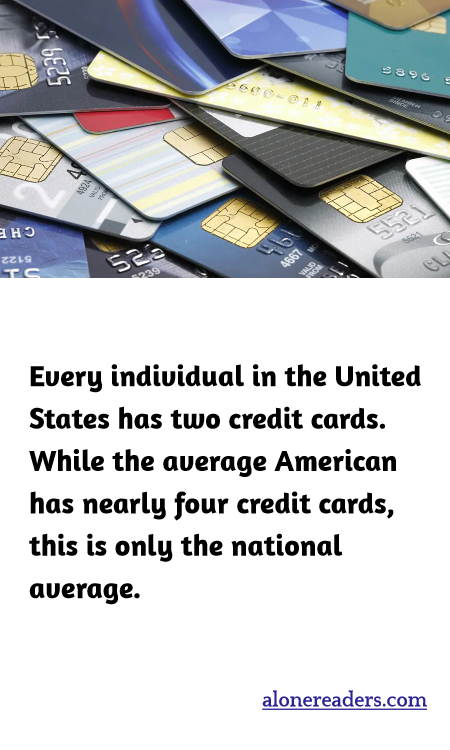
In the financial landscape of the United States, credit cards are a ubiquitous tool for managing personal finance, influencing everything from purchasing decisions to credit scores. Given their integral role, it's interesting to note the variance in the number of credit cards that Americans actually hold. Although it's often stated that every individual has two credit cards, the reality is more nuanced.
Statistically, the average American holds nearly four credit cards. This number is a median that reflects a broad range of personal financial situations, from those who hold no cards at all to those who manage a diverse portfolio of cards. This average suggests a comfort with, and reliance on, credit card use that spans various walks of life, from young adults building their credit history to seasoned users maximizing rewards programs.
The reasons behind this significant reliance on credit cards are manifold. Credit cards offer a convenient way to pay, build credit, manage emergency expenses, and benefit from rewards and cashbacks. They are also a tool for budget management, allowing consumers to track spending efficiently. Moreover, credit systems in the U.S. encourage the acquisition and use of multiple cards. Credit scores, for instance, are partially built on the diversity of credit lines and the age of accounts, incentivizing consumers to maintain more cards over longer periods.
However, while there are clear benefits to having multiple credit cards, there are also risks involved. These include the potential for accruing high-interest debt, damaging credit scores due to mismanagement, and falling victim to credit card fraud. The key to effective credit card use is understanding terms of use, recognizing personal spending habits, and responsibly managing balances and payments.
Ultimately, the number of credit cards one holds is a personal choice, influenced by financial literacy, income levels, and personal spending habits. While the national average stands at about four cards, individual financial strategies can vary widely, reflecting the diverse economic landscapes in which Americans live and work. Reconciling these personal financial strategies with responsible credit use is essential in navigating the complex world of personal finance in today's economy.
