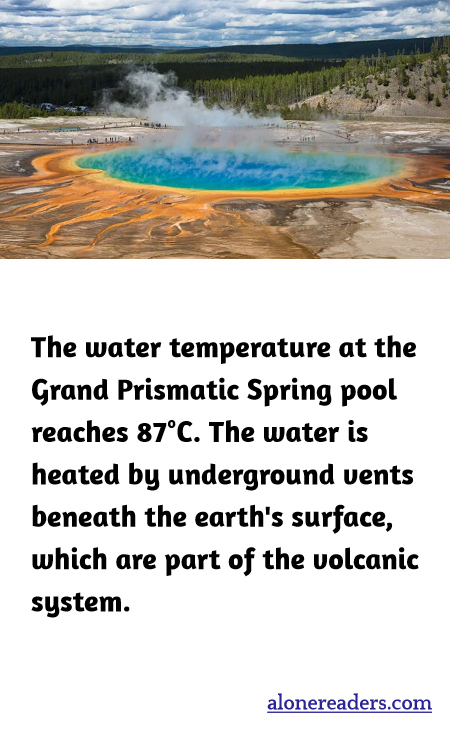
The Grand Prismatic Spring, located in Yellowstone National Park, is not only a sight to behold because of its vivid colors and immense size but also a striking example of geothermal activity. The water in the pool of this spring reaches temperatures up to 87°C (188°F), a warmth that can be attributed to the heated underground vents known as geysers. These vents are an integral part of the area's vast volcanic system, which lies beneath the surface of the earth, forming what is known as a hot spot.
The mechanics behind the heating involve the movement of water through the earth's crust, where it comes into close proximity with hot magma chambers. These chambers, filled with molten rock from the Earth's mantle, heat the water. As the water heats, it becomes less dense and rises back to the surface, carrying with it the heat absorbed from its subterranean journey. When it emerges, it forms what we see as the Grand Prismatic Spring.
This spring, the largest in the United States and the third largest in the world, showcases a range of colors from deep blue in the center to orange, red, and yellow on the fringes. These colors are the result of different microbial populations that thrive at various temperatures within the spring. These microbes form microbial mats that depict a vivid palette of colors that visually radiate outward from the scorching center.
Understanding the natural processes of the Grand Prismatic Spring provides insight not only into geothermal activity but also into the complex ecosystems that can exist in extreme environments. Such knowledge underscores the dynamic nature of Earth's geology and the intricate ways in which life adapts to even the most severe conditions. The grand spectacle of the Grand Prismatic Spring is a striking reminder of the potent forces that shape our planet and the delicate balance of ecosystems adapted to thrive in conditions that to many organisms would be deadly.
