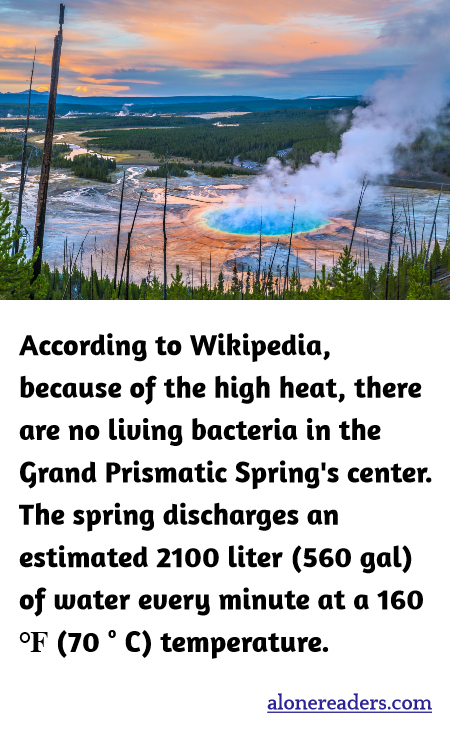
The Grand Prismatic Spring in Yellowstone National Park is not only a stunning visual spectacle but also an intriguing study in microbial resilience and geothermal activity. The vivid colors that ring the spring’s deep blue center arise not from pigments, but from a community of heat-loving microorganisms that thrive in its unique ecological niches. Despite the inhospitable conditions found at the heart of the spring, where temperatures can soar to 160°F (70°C) and no living bacteria can survive due to the extreme heat, the cooler, slightly less hostile areas of the spring support a diverse array of microbial life.
The intense heat of the spring's center comes from geothermal activity below the surface. Yellowstone itself is situated atop a volcanic hotspot, and the Grand Prismatic Spring is just one of many hydrothermal features in the park driven by this underlying heat. The spring discharges around 560 gallons (approximately 2100 liters) of water per minute, a testament to the powerful forces at work beneath Yellowstone.
The vivid hues that form the iconic rainbow effect around the spring result from microbial mats around the edges, where the water cools sufficiently to allow life to flourish. These mats contain cyanobacteria, which can tolerate warmer waters that would be lethal to most other organisms. As the temperature of the water changes with the seasons as well as with the varying depths and flow rates, so too does the composition of the microbial populations, leading to seasonal shifts in color.
Thus, the Grand Prismatic Spring serves as a compelling example of life’s adaptability. By carving out niches within such extreme and variable conditions, these microorganisms not only survive but create one of the most visually striking natural phenomena on Earth. This colorful display not only attracts scientists and researchers looking to understand more about extremophiles and geothermal ecology but also draws millions of visitors each year, all eager to glimpse this natural wonder of the world.
