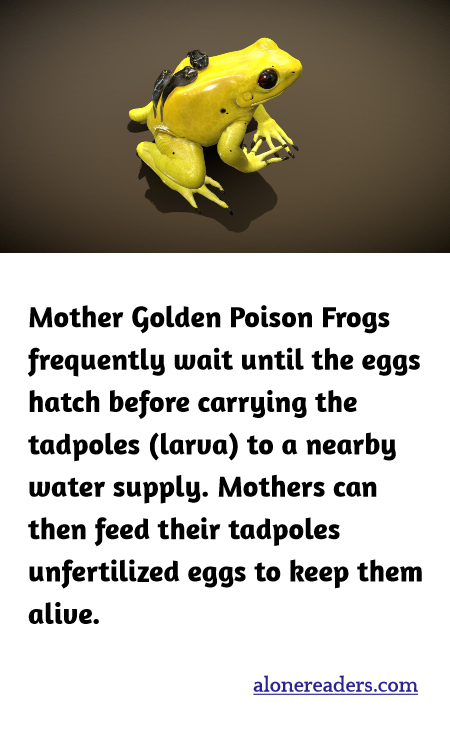
Golden poison frogs, scientifically known as Phyllobates terribilis, exhibit fascinating maternal behaviors that are particularly intriguing in the realm of amphibians. These vibrant creatures, native to the rainforests of Colombia, are most famous for their potent toxin, but their reproductive strategies are equally noteworthy for their complexity and efficiency.
The reproductive journey of the golden poison frog begins when the female lays her eggs on the forest floor, typically in a moist area hidden from potential predators. Unlike many other frog species that may abandon their eggs post-spawning, mother golden poison frogs demonstrate a remarkable level of parental care. They vigilantly guard the eggs, maintaining a watchful eye to ward off any threats and to ensure the eggs remain moist, often hydrating them if needed.
What truly distinguishes these amphibians is their behavior once the eggs hatch. The emergence of tadpoles signals the start of a crucial phase of parental involvement. In a meticulous process, the mother frog will transport the tadpoles one by one. Clinging to their mother's back, the tadpoles are carried from the terrestrial nest to a more aquatic environment, which is often a water-filled bromeliad leaf or similar small body of water. This not only protects the tadpoles from ground-based predators but also places them in a habitat where they are less likely to encounter aquatic predators that could pose a threat in larger bodies of water.
Nutrition is another critical aspect of the mother's care. In the limited confines of a bromeliad, food sources can be scarce. To ensure her offspring's survival, the mother frog provides them with unfertilized eggs to eat. These nutrient-rich eggs are vital for the tadpoles' growth and development during the early stages of their lifecycle. This direct feeding strategy allows the tadpoles to receive nourishment in an environment where it would otherwise be challenging to obtain enough food to sustain them.
This level of maternal investment is relatively rare among amphibians and underscores the unique evolutionary adaptations of the golden poison frog. By actively managing both the microhabitat and diet of their offspring, these mothers greatly increase the survival rates of their tadpoles, which is vital for the continuation of their species, especially given their restricted geographical range and the ongoing threats of habitat loss and environmental changes.
The maternal behaviors of the golden poison frog are a compelling example of nature's complexity and the extraordinary lengths to which some species will go to ensure their offspring's survival. It serves as a powerful reminder of the intricate connections within ecosystems and the importance of conserving the rich biodiversity of our planet.
