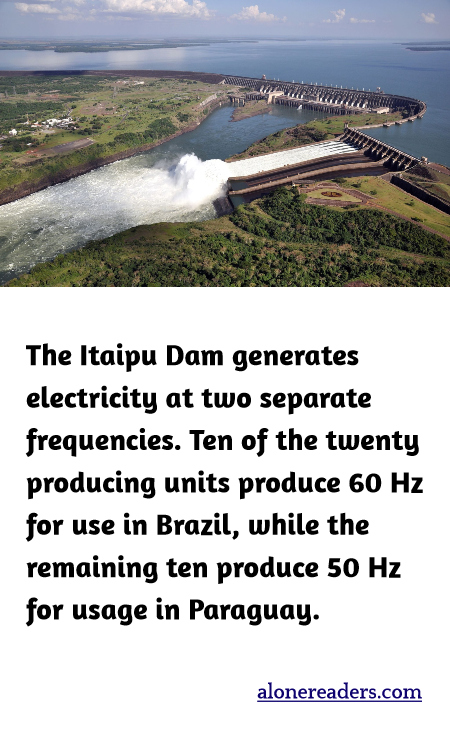
The Itaipu Dam, a marvel of modern engineering, stands as one of the largest hydroelectric facilities in the world. Located on the Paraná River at the border between Brazil and Paraguay, it plays a crucial role in the energy sectors of both countries. Remarkably, the Itaipu Dam is engineered to generate electricity at two different frequencies—a feature that underscores its strategic operational flexibility and technological sophistication.
To cater to the differing electrical standards of Brazil and Paraguay, the Itaipu Dam's twenty turbines are split evenly in their function. Ten of these turbines are dedicated to generating power at 60 Hz exclusively for Brazil. This frequency aligns with the North American standard used in Brazil, supporting its vast power network that fuels the country's bustling cities and industries.
On the other side, the remaining ten turbines generate electricity at 50 Hz, which is the standard frequency used across Paraguay. This adaptation allows Paraguay to harness energy efficiently from Itaipu, seamlessly integrating it into their national grid without the need for conversion processes, which can lead to losses in energy efficiency and increased operational costs.
This dual-frequency production capability is not just a technical triumph but also a testament to the bilateral cooperation between Brazil and Paraguay. The division of frequencies facilitates an equitable sharing and management of the generated power, ensuring that both countries benefit from the dam’s output. Moreover, the arrangement highlights the importance of regional cooperation in managing shared natural resources and infrastructure for mutual benefit.
Overall, the ability of the Itaipu Dam to generate electricity at two separate frequencies allows for a more effective and tailored approach to meeting the distinct energy requirements of Brazil and Paraguay. This feature, along with the dam's tremendous output and environmental considerations, solidifies Itaipu's position as a cornerstone in the energy landscapes of both nations.
