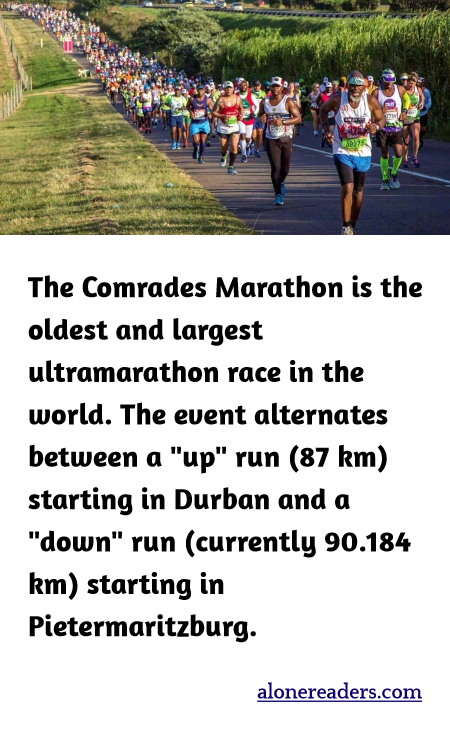
The Comrades Marathon, an illustrious and grueling test of human endurance and spirit, stands as the world's oldest and largest ultramarathon. Originating in 1921, this annual South African event has grown not only in scale but also in prestige, drawing runners from all corners of the globe. The race is characterized by its challenging route, which alternates annually between the "up" and "down" run. The "up" run starts from Durban and covers approximately 87 kilometers, whereas the "down" run begins in Pietermaritzburg and spans around 90.184 kilometers.
This ultramarathon was the brainchild of Vic Clapham, a World War I veteran who, through the race, aimed to commemorate the South African soldiers killed during the war. Clapham also wanted to mirror the physical demands and the camaraderie he experienced in the military, thus the race's motto, "It's not about speed and medals; it's about camaraderie and endurance." This ethos continues to resonate with participants, many of whom describe completing the race as a life-changing experience.
The course itself is notorious for its rigorous hills and varying climate conditions, which can swing dramatically during the typically 12-hour race. Runners ascend and navigate through five major hills, commonly referred in the race lingo as the "Big Five" – each with its own history and unique set of challenges. These include Botha's Hill, Polly Shortts, and Inchanga, among others, which are as much a mental challenge as they are a physical one.
Participation in the Comrades Marathon is capped, yet each year, thousands of hopefuls from various athletic backgrounds aspire to test their limits. The race is inclusive, attracting elite athletes and amateur runners alike, with each participant sharing the common goal of reaching the finish line within the allotted 12 hours to earn the coveted Comrades Marathon medal.
The Comrades Marathon is not just a race; it is a major social event that fosters not only national but international friendship and understanding. Each intersection of the race route buzzes with spectators who rally to support the runners, offering refreshments, moral support, and often spontaneous entertainment, thus contributing to an electrifying atmosphere. As such, it transcends the mere act of running, encapsulating a prolonged moment of collective human effort and mutual support, emblematic of the broader human experience.
