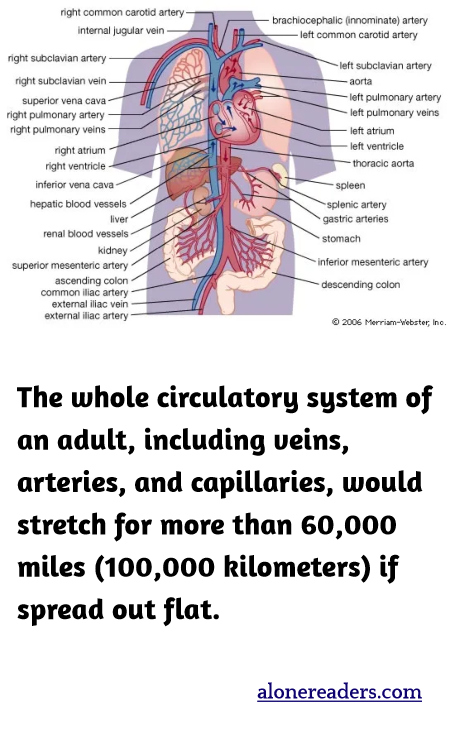
The human circulatory system, a complex network that fuels the body's organs and tissues, is an intricately woven web of blood vessels. When stretched out flat, the entire circulatory system—including veins, arteries, and capillaries—of an average adult would measure more than 60,000 miles (about 100,000 kilometers). This vast system plays a crucial role in maintaining life by not only delivering oxygen and nutrients to body tissues but also by removing carbon dioxide and waste materials.
The heart, the pump at the center of this system, beats approximately 100,000 times a day to push blood through these vessels. Arteries carry oxygen-rich blood away from the heart and to the body's tissues, while veins return oxygen-poor blood back to the heart. Capillaries, the small and thin branches of the blood vessel network, function as the exchange points where nutrients and wastes are traded between blood and tissues.
This extensive reach of our circulatory system is essential for stabilizing body temperature and pH, and it plays a part in maintaining a balance of fluids. The length of the vessels showcases the system’s complexity and the body’s efficiency in sustaining life over a wide range of activities and conditions. Every second, blood travels the equivalent of the entire length of the body, highlighting how dynamic and responsive this system needs to be to adapt to the demands of life, from resting states to intense physical activity.
Understanding this immense network also has crucial medical implications. Diseases such as arteriosclerosis, hypertension, and venous thrombosis disrupt normal circulatory function, posing serious health risks. Medical experts and researchers continually analyze how to protect or rehabilitate this vital system, developing treatments and preventive measures.
Therefore, the circulatory system not only exemplifies the marvel of biological engineering but also underscores the essential upkeep required to maintain health and prevent cardiovascular diseases. The intricate design and expansive reach ensure that life-sustaining blood continuously nourishes every cell, highlighting the intricate synergy between structure and function in the human body.
