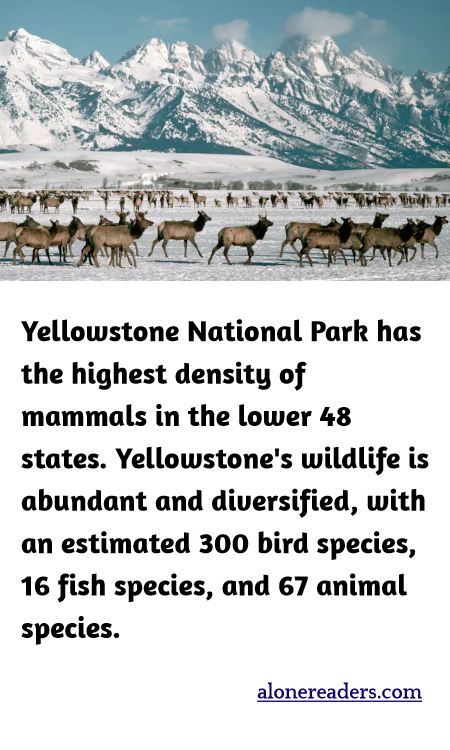
Yellowstone National Park, renowned for its rich biodiversity and stunning landscapes, holds the distinction of having the highest density of mammals in the lower 48 states of the United States. This vast park, sprawling across Wyoming, Montana, and Idaho, serves as a critical sanctuary for a plethora of wildlife species, fostering a delicate balance within its ecosystems.
At the heart of Yellowstone’s wildlife spectacle are the 67 mammal species that roam its expansive valleys and rugged mountains. From the mighty grizzly bears and wolves that have captured public fascination, to the herds of bison that represent the American West, each species plays a fundamental role in maintaining the ecological dynamics of the park. Elk, deer, and pronghorns are often seen grazing in the park’s meadows, while elusive mountain lions and bighorn sheep navigate the steeper terrains.
Birdwatchers also find Yellowstone a paradise with an impressive array of about 300 bird species. The park’s avian population includes everything from the majestic bald eagles and ospreys to the tiny hummingbirds. Waterfowl and shorebirds thrive in the park’s numerous lakes and rivers, with the trumpeter swan being a notable resident. The varied climates and altitudes across the park create a perfect backdrop for migratory birds, making it an ideal spot for birding enthusiasts.
The park’s waters are not devoid of life either; they teem with 16 fish species, providing a vital resource for both the animal inhabitants and the park’s ecosystem. Native species such as the Yellowstone cutthroat trout play a crucial role in the food chain, supporting species such as bears and otters, while also contributing to the recreational aspect of fishing within the park.
Yellowstone’s management practices have been essential in preserving this diverse wildlife. Efforts include the reintroduction of species, such as gray wolves in the 1990s, which has been a contentious yet successful endeavor in terms of restoring natural balance to the ecosystem. Likewise, stringent policies and regulations help minimize human-wildlife conflicts, ensuring that the park remains a safe haven for its residents.
This high concentration of mammals and the overall diversity in Yellowstone not only underline the natural richness of the park but also highlight the importance of conservation efforts to maintain these irreplaceable ecosystems. As more visitors flock to Yellowstone each year, the role of education in promoting responsible tourism becomes crucial. It is through these combined efforts that Yellowstone continues to be not just a national park, but a vibrant, thriving haven for America's wildlife.
