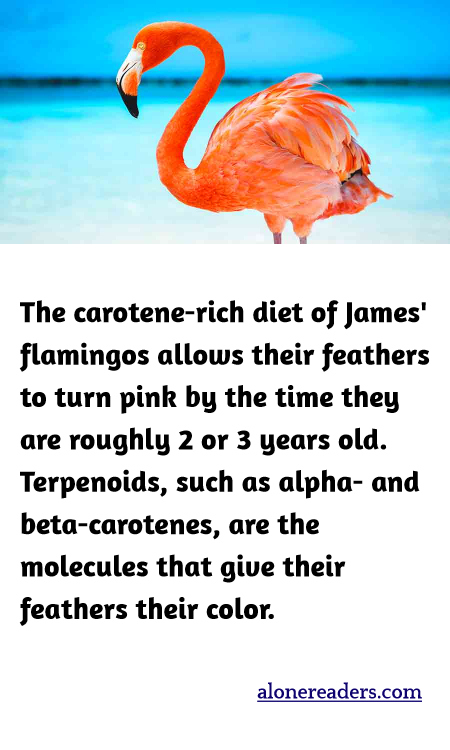
James' flamingos, also known as Puna flamingos, exhibit a fascinating transformation in feather color as they mature, shifting from a muted gray to a striking pink. This change is largely due to their diet, which is rich in carotene, specifically alpha- and beta-carotenes. These molecules are a type of terpenoid, which are naturally occurring organic chemicals found in many plants and some animal products.
The flamingos primarily feed on algae and small crustaceans that thrive in their salty lake habitats, such as in the high Andean plateaus of South America. These food sources are abundant in carotenoids, which are ingested and deposited in the flamingos' feathers. As they grow and continue consuming these carotene-rich diets, the concentration of these pigments in their feathers increases, which leads to the deepening of their pink coloration.
The process of coloration in James' flamingos is a perfect illustration of how diet can influence physical attributes in wildlife. Depending on the availability of food sources rich in carotenoids, the intensity of the pink shade in the flamingos can vary, reflecting their nutritional status and the ecological conditions of their habitat. Interestingly, carotenoids not only contribute to the flamingo’s vibrant appearance but are also powerful antioxidants and play a role in the immune response.
This adaptive trait also serves an important role in mating rituals, as flamingos with brighter plumage are often more attractive to potential mates. Thus, the intensity of the pink coloration is not just a byproduct of their diet but a crucial factor influencing their reproductive success. As these birds reach about 2 to 3 years of age, the full impact of their carotene intake is manifested in the rich pink hue of their feathers, signaling their maturity and readiness for breeding.
Overall, the diet of James' flamingos beautifully highlights the link between environmental factors and biological adaptations, reminding us of the complex interactions within ecosystems and the importance of preserving natural habitats for such unique species.
