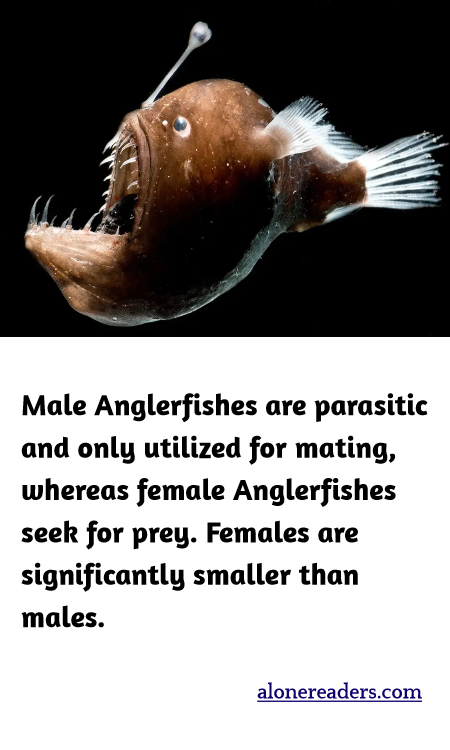
Deep beneath the ocean's surface resides the mysterious and often misunderstood anglerfish, a creature known for its unique and somewhat disturbing reproductive strategy. Among the more than 200 species of anglerfishes, the sexual dimorphism and roles between males and females are strikingly different, especially in their approach to survival and reproduction.
Male anglerfishes are minuscule compared to their female counterparts, and their life’s mission is singular: to find a female and mate. The males, which can be dozens of times smaller than females, have evolved to become essentially parasitic during mating. They lack the ability to hunt as adults, with diminished digestive systems, and so must quickly find a female to attach themselves to, or risk starving. Once a male finds a female, he bites into her skin, and over time, his body fuses to hers. His organs gradually atrophy, leaving only the testes functional for when the female is ready to spawn. This bizarre form of reproduction ensures that the female, when she releases her eggs, has a ready and waiting source of sperm to fertilize them.
Conversely, the female anglerfish is a formidable predator. Equipped with a bioluminescent lure protruding from her forehead, she uses this glowing appendage to attract prey in the pitch-black depths of the ocean. This lure, which harbors bacteria that produce light through a chemical reaction, is wiggled like a worm to tempt unsuspecting fish and squid. Once her prey is within reach, the female anglerfish snaps it up with her large, sharp teeth and flexible jaw, which can expand to swallow prey twice her size.
This stark contrast in size and function between male and female anglerfish speaks volumes about the evolutionary pressures of their deep-sea environment. Energy conservation is crucial where food is scarce, prompting the males to evolve into tiny, dependent beings that can focus all their limited resources on finding a mate. Females, on the other hand, have developed into efficient, solitary predators capable of sustaining themselves and their future offspring.
The life of an anglerfish, especially the eerie reality of the parasitic males, underscores the alien nature of life at great ocean depths. Adaptation in this extreme environment follows rules that often defy our expectations and expand our understanding of the diversity of life on Earth. This bizarre reproductive strategy, although shocking, is a perfect example of how life finds a way to thrive under the most unlikely and harsh conditions.
