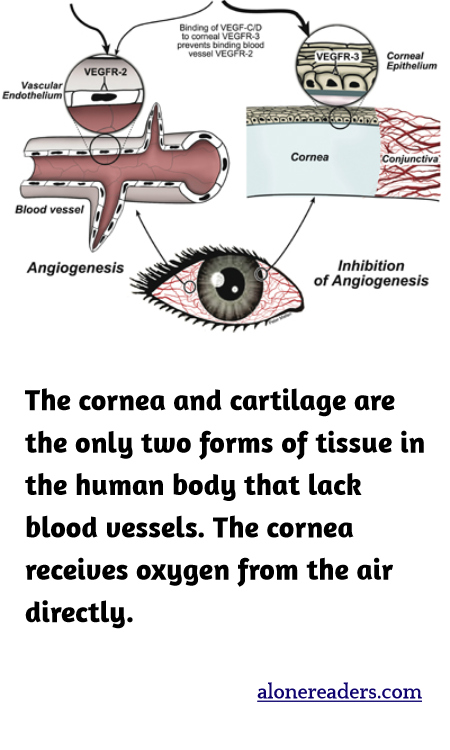
The human body is a complex and fascinating structure, composed of various types of tissues and organs, each with unique characteristics and functions. Among these, the cornea and cartilage stand out for a distinctive feature: they are avascular, meaning they lack blood vessels. This absence has significant implications for how these tissues function and how they receive the nutrients necessary for their survival.
The cornea is the transparent front part of the eye that covers the iris, pupil, and anterior chamber. Its primary role is to refract light, helping to focus visual images onto the retina. Because clarity is crucial for its function, the cornea contains no blood vessels; blood vessels would obstruct the passage of light, leading to blurred vision. Instead, the cornea obtains oxygen directly from the air—a unique feature among body tissues. Oxygen dissolves in the tear fluid on the eye’s surface and diffuses throughout the cornea to reach the cells. Additionally, essential nutrients are supplied to the cornea through the aqueous humor—the clear, watery fluid that fills the space between the cornea and the iris.
Like the cornea, cartilage is also avascular. Cartilage is a flexible connective tissue found in many areas of the human body including the joints, rib cage, ear, nose, bronchial tubes, and intervertebral discs. It is made up of cells called chondrocytes mixed with collagen and other fibers that provide structure and support, yet allow flexibility. Cartilage's avascular nature means that nutrients must be diffused through the matrix from surrounding tissues. This process is generally slower than blood transport, which is why cartilage injuries often heal slowly and can be difficult to repair.
The avascularity of both the cornea and cartilage poses unique challenges in medical treatment and surgery. For example, the lack of blood vessels in the cornea helps maintain transparency but also contributes to slower wound healing responses. Similarly, in cartilage, the absence of a direct blood supply complicates the repair of damaged tissue, which in turn complicates the treatment of joint diseases such as arthritis.
Despite these challenges, the body has evolved to maximize the efficiency and functionality of these tissues under their unique constraints. Researchers continue to explore new therapeutic approaches, including improved surgical techniques and advanced biomaterials, to effectively treat disorders associated with these critical structures. Understanding the unique physiology of avascular tissues like the cornea and cartilage not only enlightens basic biological science but also enhances the methodologies for addressing related clinical conditions.
