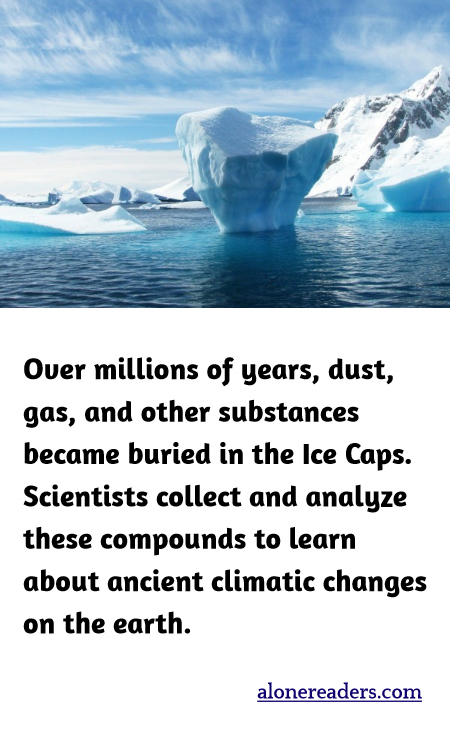
Throughout the vast timeline of Earth's history, ice caps have served as silent, yet formidable archives of our planet’s climatic past. Over millions of years, layers of ice accumulating at the poles have entrapped tiny particles of dust, gas, and a variety of other substances, each layer acting like a page in a long-forgotten book waiting to be read.
Scientists drill deep into these frozen records to extract ice cores, cylindrical samples that contain trapped air bubbles and other remnants from past millennia. By studying these ice cores, researchers can gain invaluable insights into the composition of the Earth’s atmosphere across different historical epochs. For instance, the air bubbles captured in these cores allow scientists to measure past concentrations of greenhouse gases, such as carbon dioxide and methane. This information is crucial for understanding how the Earth's climate has changed over time, and what might have been the drivers of those changes, such as volcanic eruptions or large-scale deforestation.
Moreover, ice cores also contain dust particles that have traveled great distances by wind before settling on the ice. Analyzing this dust can provide clues about continental weather patterns, soil erosion processes, and even distant volcanic activity that occurred in the past. Similarly, isotopic analysis of the ice itself can shed light on the temperatures that prevailed at the time the ice was formed. This is particularly important for constructing accurate climate models that project future climatic conditions.
These efforts to decode the frozen archives of our planet extend our understanding not only of Earth’s climatic history but also of the interlinkages between various environmental systems. For instance, by illuminating natural fluctuations in Earth’s climate, ice cores help differentiate between natural and human-induced climatic changes, offering critical data for current debates and policies on climate change.
The ongoing study of ice core samples is a powerful reminder of how much of our planet’s history remains hidden within the natural world around us, and how much there is still to learn. The insights gathered from these ancient icy entrapments continue to be pivotal in our quest to understand the complexities of global climate patterns and aid significantly in our attempts to predict and mitigate future changes.
