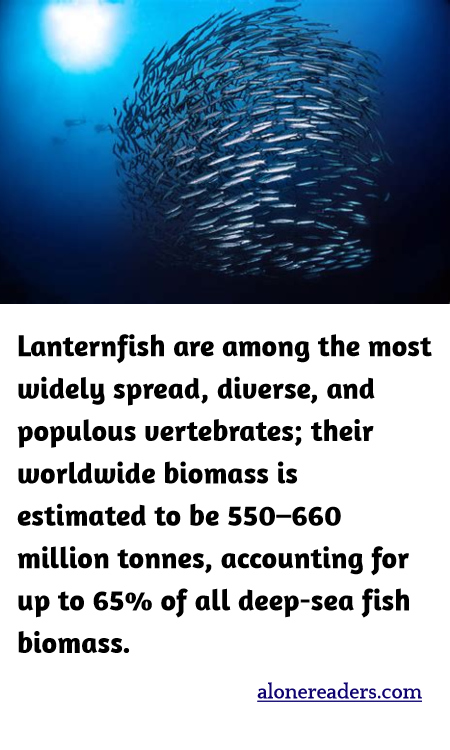
Lanternfish, with their notable bioluminescent features, represent a significant component of the ocean's ecosystem. These small, shimmering creatures inhabit depths from 200 to 1000 meters in the twilight zone of the ocean, where light begins to fade and darkness takes over. This unique adaptation of bioluminescence not only helps them in luring prey but also plays a crucial role in their survival, aiding in predator avoidance and communication among their species.
The staggering biomass of lanternfish, estimated to be between 550 and 660 million tonnes, underscores their critical role in marine food webs. This figure indeed highlights the fact that lanternfish account for up to 65% of all deep-sea fish biomass. Their vast numbers and widespread presence in various oceans allow them to be a key prey item for a multitude of marine predators, including larger fish, cetaceans, and seabirds. This positions lanternfish as essential connectors of energy transfer within aquatic ecosystems.
What makes lanternfish particularly intriguing is their role in the biological pump, a process critical to the ocean's carbon cycle. During their daily vertical migrations — ascending to shallower depths at night to feed and descending back into the depths by day — lanternfish help transport carbon dioxide from the surface deeper into the ocean. This behavior effectively makes them facilitators in reducing atmospheric CO2 levels and mitigating climate change impacts.
Despite their abundance and ecological importance, lanternfish are not as well known as other marine species, primarily due to their deep-sea habitat and small size. However, the ongoing research and increasing attention to oceanic depths pose significant reasons to hope that the study of lanternfish will reveal further insights into our planet's changing climate and how deep-sea ecosystems function and respond to various environmental pressures.
In conclusion, lanternfish are not just abundant; they are pivotal to the marine ecosystem's health and functionality. Their presence bolsters the ocean's biodiversity and aids in essential environmental processes. As research expands, understanding the complexities of these luminescent creatures will undoubtedly shed light on more than just the ocean's depths; it will illuminate broader ecological connections across the globe’s oceans.
