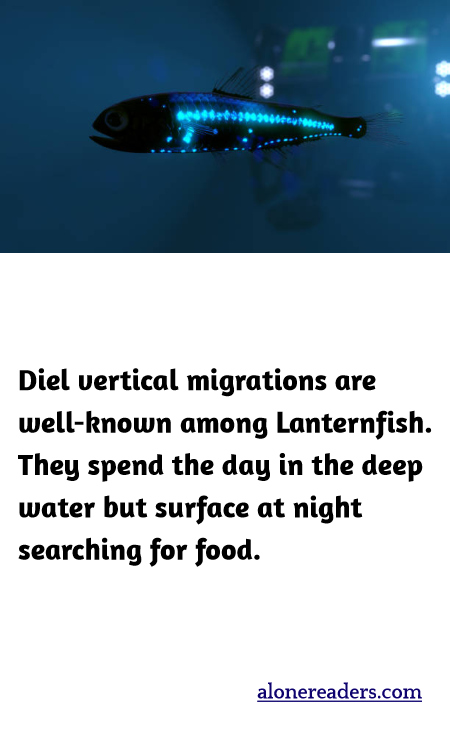
Diel vertical migration (DVM) is a common behavior observed in many marine species, but it is particularly well-documented in lanternfish. These small, bioluminescent fish undertake one of the most spectacular and large-scale movements observed in the ocean. During the day, lanternfish reside in deep waters, often several hundred meters below the surface. This behavior is primarily a defensive mechanism to avoid predators that hunt by sight in the well-lit upper layers of the ocean.
As the sun sets, lanternfish begin their nightly journey towards the surface. This migration is driven by the need to feed. The upper layers of the ocean are richer in nutrients and host a variety of plankton and smaller fish, which constitute the lanternfish's diet. By migrating at night, lanternfish can take advantage of these food resources while still avoiding larger predators, which typically have poorer night vision.
The bioluminescence of lanternfish plays a crucial role in their survival during these nightly migrations. Their light-emitting organs help them to camouflage in the faintly lit waters, masking their silhouette from predators lurking below. These light-producing organs can also be used for signaling to attract mates or to communicate with other lanternfish.
Interestingly, the migration patterns of lanternfish also have broader ecological implications. As they move up and down the water column, they transport nutrients across different layers, facilitating an exchange that is vital for the marine food web. This process can even influence global climate patterns since the vertical distribution and movement of such a large number of fish can impact the ocean's carbon cycle.
Despite their abundance and ecological importance, many aspects of lanternfish behavior and physiology remain a mystery. Ongoing research continues to uncover how these creatures manage their energy expenditures during their extensive nightly migrations and how environmental changes might impact their populations. Understanding these patterns is crucial not only for ecological studies but also for managing fisheries and conserving marine biodiversity, highlighting once again how even the most routine behaviors of sea creatures can have far-reaching impacts on ocean ecology.
