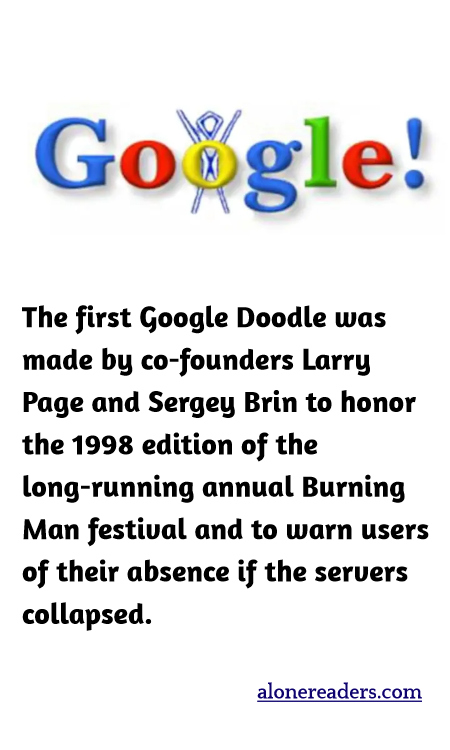
In 1998, Larry Page and Sergey Brin, the co-founders of Google, decided to create a unique, playful message that would communicate their absence from the office as they attended the Burning Man festival in Nevada. Instead of a standard out-of-office notification, they chose to modify the Google logo on their homepage. This modification was intended not only to inform users of their whereabouts should the server experience issues in their absence but also to pay homage to the iconic cultural event they were attending.
This playful tweak to the Google homepage logo led to the birth of the "Google Doodle." Initially, the concept behind the Doodle was simple: to creatively alter the Google logo to reflect contemporary events, honor historical figures, celebrate holidays, and highlight important world issues. The first Doodle was relatively basic in design—a stick figure drawing that was incorporated into the second "o" of the Google logo, representing the festival's iconic man effigy.
The positive response from users was overwhelming, piquing the interest of the budding internet company in continuing this tradition. The concept quickly grew more ambitious and creative over the years. Google soon established a dedicated team of artists and engineers—Doodlers—tasked with creating these engaging illustrations. Today, Doodles have become a beloved feature of the brand, showcasing a wide range of interactive, informative, and creative artworks that reflect a diversity of cultures, perspectives, and ideas.
The evolution of Google Doodles has witnessed everything from simple illustrations to intricate animations and interactive games that educate, entertain, and encourage appreciation of sometimes lesser-known historical events and figures. Over the years, hundreds of Doodles have been displayed, making the Google homepage not just a destination for search but also a canvas for art, learning, and celebration of human creativity and diversity. This initiative has effectively transformed the way people interact with the Google search bar, turning an average day of internet searching into a potential moment of delight and discovery.
