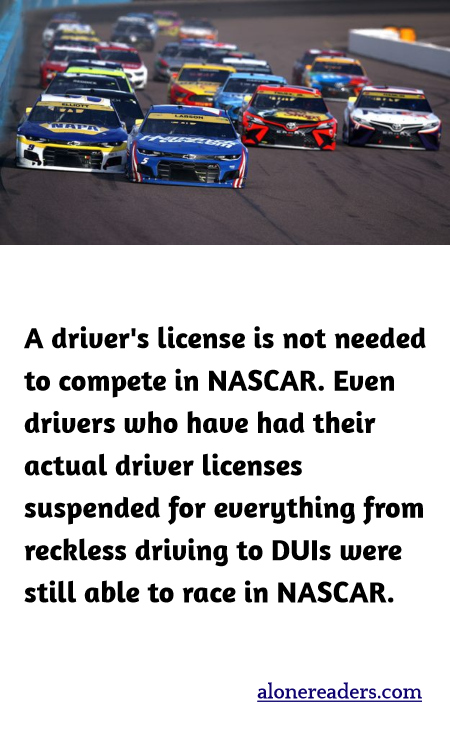
In the world of professional racing, holding a standard driver's license is not a requirement to compete in NASCAR events. This might seem surprising given that driving at incredibly high speeds in competitive environments would presumably require every possible verification of driving ability. However, NASCAR, the premier stock car auto racing organization in the United States, operates under its own set of rules and regulations, distinct from ordinary road driving guidelines enforced by state DMVs.
The primary reasoning behind this policy is that racing on a track is fundamentally different from driving on public roads. NASCAR drivers are required to undergo rigorous training and must meet specific qualifications to obtain a NASCAR racing license. These qualifications focus intensively on a driver's capability and performance in high-speed, competitive environments rather than on standard road safety measures typically assessed in regular driver's testing.
Interestingly, even if a NASCAR driver has their personal driver's license suspended due to infractions such as reckless driving or DUIs, they can still participate in races. This separation highlights a clear distinction between the skills and responsibilities associated with public road driving and those relevant to professional racing circuits. NASCAR drivers are viewed as highly skilled professionals who operate under controlled, closed-track conditions, where the emphasis is on competition and entertainment rather than general road safety and law adherence.
This policy perhaps raises questions about safety and responsibility, but it also reflects the unique nature of motorsport where the focus is on racing talent and ability under specific racing conditions. Therefore, despite any personal legal troubles related to their road driving privileges, as long as they comply with NASCAR's strict racing standards and safety protocols, they remain eligible to compete. This setup underscores the different realms of professional sports and everyday life, where expertise in one doesn't necessarily translate to proficiency or legality in the other.
