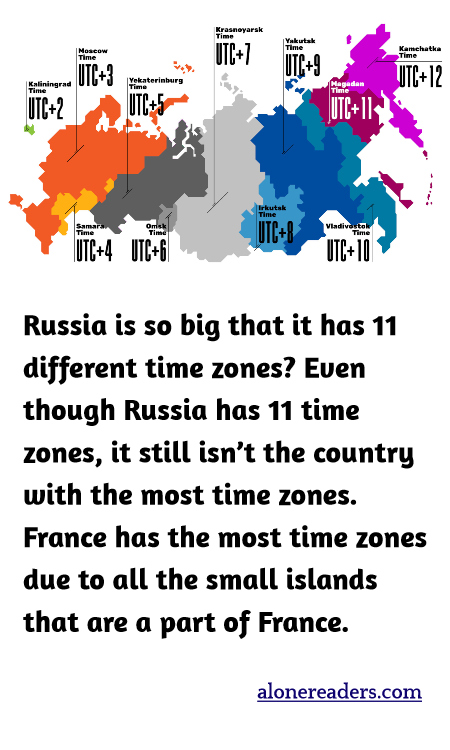
Russia, the largest country in the world by landmass, stretches across Eastern Europe and northern Asia, encompassing a vast expanse that covers 11 different time zones. This enormous geographic spread allows Russia to experience a multitude of sunrise and sunset times, affecting everything from business hours to television broadcasting schedules across its numerous regions. The easternmost parts of Russia are almost a day ahead of the western borders, highlighting the country's incredible scale and diversity in both culture and environment.
Despite its extensive reach across these 11 time zones, Russia is not the record holder when it comes to the maximum number of time zones by a country. That distinction belongs to France, although not due to its European mainland. France's extensive number of time zones, which total 12, stems largely from its various overseas territories and departments. These territories are scattered around the globe, including islands in the Caribbean, the Indian Ocean, the Pacific Ocean, and even South America. Unlike Russia’s contiguous time zones, France’s are spread worldwide, accounting for its higher count.
These differences in time zones between Russia and France illustrate intriguing aspects of how countries manage their governance and communication. While Russia's vast continuous land requires extensive coordination to synchronize activities and services like the railway schedules, France manages distant territories that operate almost independently under different administrative setups and local times. These unique challenges and management styles reflect the geographical and political makeup of these nations. Thus, despite similar challenges posed by multiple time zones, the impact and implications can vary dramatically based on the country's specific circumstances and global presence.
