More About This Card
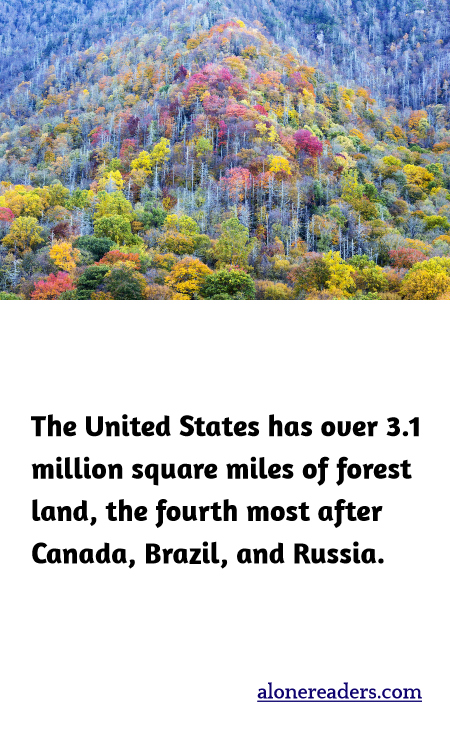
The United States is home to more than 3.1 million square miles of forest land, ranking it fourth worldwide behind Canada, Brazil, and Russia in terms of total forested area. This vast expanse of forests plays a crucial role in biodiversity, climate regulation, and the economy. Forests in the U.S. range from the coniferous rainforests in the Pacific Northwest to the hardwood forests of the Appalachian Mountains, each ecosystem supporting a unique variety of flora and fauna.
Forests cover approximately 33% of the country's land area, demonstrating their importance not only to the environment but also to the people who utilize these spaces for recreation, livelihood, and shelter. They are vital in absorbing carbon dioxide, thereby mitigating the effects of climate change. In addition, forests help to regulate water cycles, filter pollutants from the air, and serve as critical habitats for countless wildlife species.
The management of these forested areas involves various stakeholders, including federal and state agencies, private forest owners, and indigenous tribes. Policies aimed at sustainable management and conservation are crucial to address issues such as deforestation, forest degradation, and biodiversity loss. The United States Forest Service (USFS), an agency of the U.S. Department of Agriculture, plays a significant role in overseeing and implementing these policies.
Moreover, U.S. forests are a significant economic resource, supporting various industries such as timber, paper, and related sectors, contributing billions of dollars to the economy and providing jobs to hundreds of thousands of Americans. Sustainable practices are increasingly important in these industries to ensure that this resource remains viable and healthy for generations to come.
In addition to their economic value, forests in the United States are popular recreation areas, attracting millions of tourists and nature enthusiasts each year. Activities such as hiking, bird watching, and camping are common, providing people with the opportunity to connect with nature and promoting mental and physical well-being.
In conclusion, the extensive forest lands in the United States are a national treasure with profound ecological, economic, and social benefits. Continuous efforts to protect and manage these forests responsibly are essential to preserve these benefits for future generations, contributing to broader environmental sustainability goals globally.