More About This Card
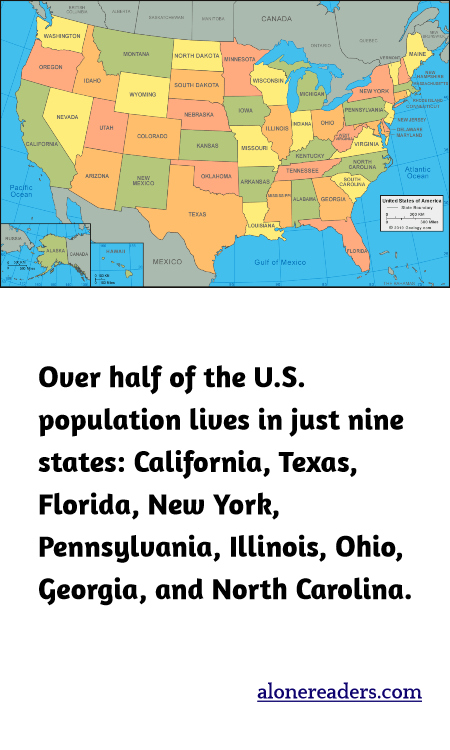
The demographic distribution in the United States shows a fascinating pattern, where over half of the nation’s population resides in just nine states: California, Texas, Florida, New York, Pennsylvania, Illinois, Ohio, Georgia, and North Carolina. This concentration of population in these states can be attributed to various factors, including their economic opportunities, climate, and historical development.
California, the most populous state, is known for its robust economy, driven by technology, entertainment, and agriculture, making it a magnet for both domestic and international migration. Texas and Florida follow as the second and third most populous states, attracting people with their warm climates, relatively lower costs of living, and growing job markets especially in industries like energy, technology, and healthcare.
New York State's population centers heavily around New York City, a global hub of finance, culture, and entertainment, which draws people from all over the world. Pennsylvania and Illinois have significant populations due to their historical role as industrial centers, though their populations have been more stagnant compared to the Sun Belt states.
Ohio, Georgia, and North Carolina, meanwhile, have grown thanks to expansions in the finance, tech, and education sectors, with metropolitan areas such as Atlanta and Charlotte emerging as major urban and economic centers in the South. The diversification of industries and the influx of businesses have enhanced these states' appeals, combining economic opportunities with favorable living conditions.
The concentration of population in these nine states shows the interplay of migration trends, economic opportunities, and urban development shaping the United States demographic map. It reflects broader social and economic trends, such as urbanization and the Sun Belt's rise driven by high-tech industries and a shift towards service-oriented economies. As these trends continue, the demographic concentration might become even more pronounced, raising important questions about political representation, resource allocation, and infrastructure development in less populated areas. This concentration also impacts electoral politics, as these states hold significant sway in national elections due to their high number of electoral college votes.
Understanding the reasons behind such demographic distributions helps in planning for future growth, managing resources efficiently, and preparing for the socio-economic developments that affect both densely and sparsely populated areas.